TL;DR: In Vista, CA, mold remediation typically costs $500 to $15,000 depending on the square footage affected, the containment level required, and whether HVAC ductwork or subflooring needs removal. A small, contained job like a bathroom closet runs $500 to $1,500. A whole-house job with extensive material removal and post-remediation clearance testing can run $10,000 or more. Mold inspection and testing alone, without remediation, typically costs $300 to $700.
If you just pulled the baseboard off a closet wall near Buena Creek and found dark staining, or you’re smelling something musty behind the washer in a Shadowridge rental, you’re probably trying to figure out what this is going to cost before you let anyone start cutting into drywall. The honest answer is “it depends,” but not in a vague way. A handful of specific factors set the price, and once you know them, a quote stops feeling like a black box.
How Much Does Mold Remediation Cost in Vista, CA?
Most Vista homeowners pay somewhere between $500 for a small, isolated area and $15,000 or more for extensive remediation involving multiple rooms, HVAC decontamination, or structural material removal. The number that applies to your job depends almost entirely on square footage and containment complexity, not on the brand name on the invoice.
Here’s how typical ranges break down by scenario:
| Scenario | Typical Cost Range |
|---|---|
| Small isolated area (under 10 sq ft, closet or under-sink cabinet) | $500 to $1,500 |
| Single room, 100 to 300 sq ft, Level 2 containment with drywall removal | $1,500 to $4,500 |
| Bathroom or kitchen with cabinetry and subfloor involvement | $2,500 to $6,000 |
| Crawlspace or attic mold | $2,000 to $6,000 |
| Mold involving HVAC ductwork | $3,000 to $8,000 |
| Whole-house or large-scale job, Level 3/4 containment | $8,000 to $15,000+ |
| Mold inspection and testing only (no remediation) | $300 to $700 |
These are typical industry ranges for San Diego County, not a quote. Every job gets a written scope from Dry 1 Out Restoration and Construction before any work starts, so you know the number before you commit to it.
What Factors Actually Drive the Price?
Six variables move a mold remediation estimate more than anything else: square footage, containment level, materials removed, HVAC involvement, clearance testing, and the water source behind the growth.
Affected square footage. This is the biggest lever. The EPA and the mold remediation industry generally treat anything under 10 square feet as a minor job a careful homeowner can sometimes handle, 10 to 100 square feet as a mid-size professional job, and anything beyond that as requiring full containment protocols under the ANSI/IICRC S520 standard.
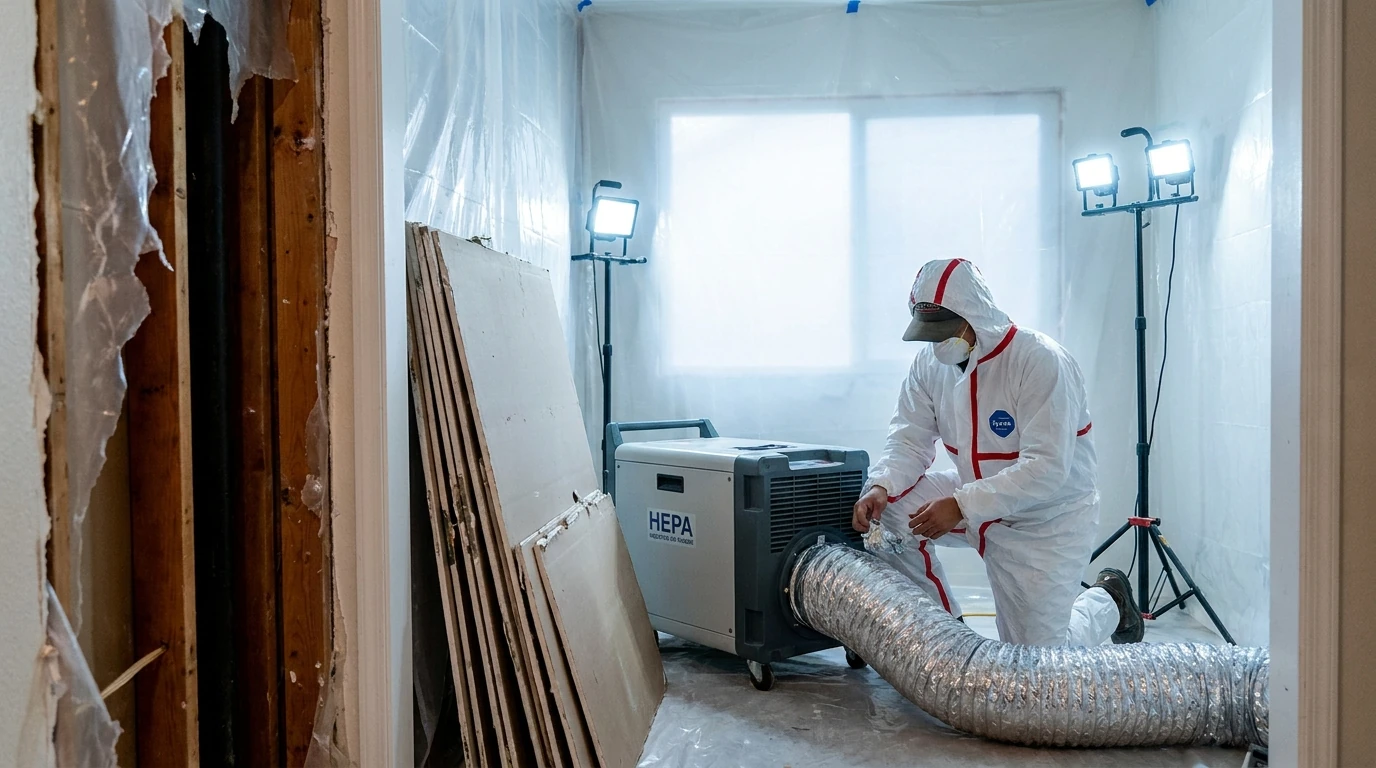
Containment level. A small closet needs a simple poly barrier. A whole room or a job involving a Category 3 water source needs negative-air containment with HEPA filtration to keep spores from spreading into the rest of the house while the work happens. More containment means more labor hours and equipment, which shows up in the price.
Materials removed. Porous materials like drywall, insulation, carpet padding, and subflooring that have absorbed moisture usually can’t be cleaned, they have to be cut out and replaced. A job that only needs surface cleaning on non-porous tile or framing costs far less than one that requires demo and rebuild.
HVAC involvement. If mold has gotten into supply or return ductwork, the whole system has to be isolated and cleaned or, in bad cases, partially replaced. This adds real cost but skipping it means spores recirculate through the house after the visible mold is gone.
Clearance testing. A third-party air quality test after remediation confirms the space is back to normal background mold levels before containment comes down. Many insurers and most responsible contractors treat this as a non-negotiable final step, and it’s billed separately from the remediation itself.
The water source. Mold from a clean water leak (Category 1) is a more straightforward cleanup than mold tied to a sewage backup or long-standing Category 3 water, which requires more aggressive protocols and, often, more material replacement.
Does Homeowners Insurance Cover Mold Remediation?
Most homeowners policies cover mold remediation only when the mold resulted from a sudden, accidental, covered event, like a burst supply line, not from a slow leak, humidity, or deferred maintenance. Many California policies also cap mold-specific coverage at a set dollar amount, commonly $1,000 to $10,000, even when the underlying cause is covered.
The practical test adjusters apply is timing and cause. If a water heater failed overnight and mold showed up in the drywall two weeks later during repairs, that’s generally treated as a covered consequence of a covered loss. If mold grew slowly behind a shower pan over two years because of a never-fixed grout crack, insurers typically deny it as a maintenance issue.
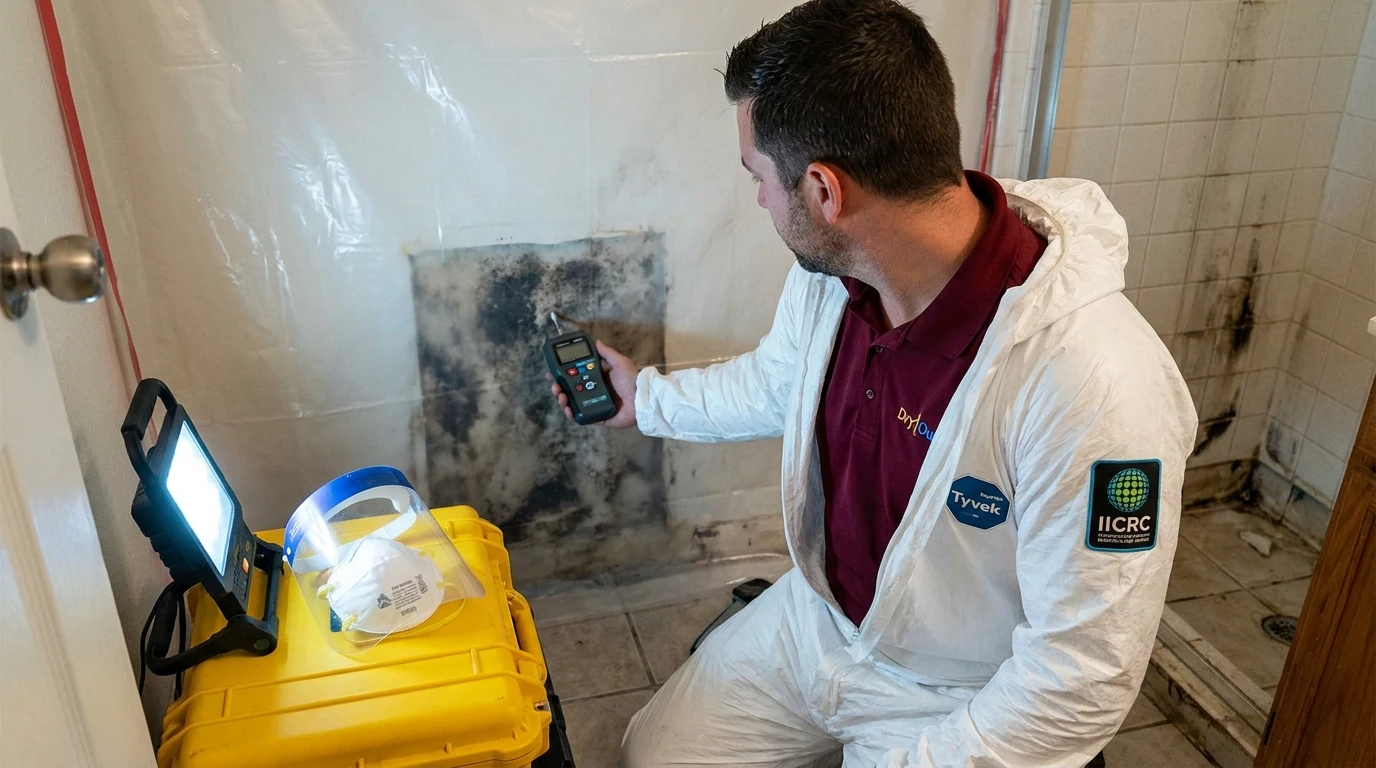
What protects a claim either way is documentation: moisture meter readings, dated photos of the source and the growth, and a clear written scope showing what was removed and why. That’s also part of why pairing mold inspection and testing with remediation matters, a documented pre- and post-condition gives the adjuster something concrete to approve, not just an invoice.
If the mold followed recent water damage, see How Quickly Does Mold Grow After Water Damage? for the timeline insurers tend to scrutinize, and Does Homeowners Insurance Cover Water Damage? for how the underlying water claim typically gets evaluated.
What Happens During a Mold Remediation Job?
A professional mold remediation job follows a fixed sequence, regardless of job size: inspect, contain, remove, clean, dry, and verify.
- Inspection and testing. A technician identifies the moisture source, maps the affected area, and may collect air or surface samples to confirm the mold type and extent.
- Containment setup. Poly sheeting and negative-air machines isolate the work area so spores don’t spread to unaffected rooms during demolition.
- Material removal. Porous materials that absorbed moisture (drywall, insulation, carpet) are cut out and bagged for disposal; salvageable materials are treated.
- HEPA cleaning. All remaining surfaces inside containment get HEPA-vacuumed and cleaned with an EPA-registered antimicrobial.
- Drying. Air movers and dehumidifiers bring the space back to normal humidity, the same equipment used in standard water damage restoration when a leak caused the mold.
- Clearance testing. A final air or surface sample confirms spore counts are back to normal before containment comes down and rebuild starts.
How Do I Get an Accurate Mold Remediation Quote in Vista?
The only way to get a real number is a physical assessment, because square footage, material type, and moisture source can’t be estimated from a phone description. A technician measures the affected area, checks moisture levels in surrounding materials with a meter, and identifies whether containment needs to be Level 1, 2, or 3 before writing a scope.
If you’re not sure whether what you’re looking at is actually mold or just surface staining, start with How To Test for Mold in Your Home or 7 Signs You Have Hidden Mold. If you already know it’s mold and want a written scope and price before anything gets cut into, request a mold assessment and a technician will walk the space with you.
Mold jobs rarely cost what a phone quote guesses, because the number depends on what’s actually inside the wall. A written scope after a physical inspection is the only estimate worth trusting, and it’s standard practice before any work begins.
About Dry 1 Out Restoration and Construction
Dry 1 Out Restoration and Construction is an IICRC Certified Firm serving Vista, CA and the surrounding San Diego and Bay Area markets, holding IICRC credentials in Water Restoration (WRT), Structural Drying (ASD), and Mold Remediation (AMRT), under California license #993442. This post was prepared with input from Jason Pacheco. The company’s mold-related work covers mold inspection and testing and mold remediation, with 24/7 availability for water intrusion calls that often precede a mold job. Service details for the Vista area are available directly.
Every job is different, and the ranges above are typical figures, not a quote. Call Dry 1 Out Restoration and Construction at (888) 379-1688 for a written scope before any work starts.