
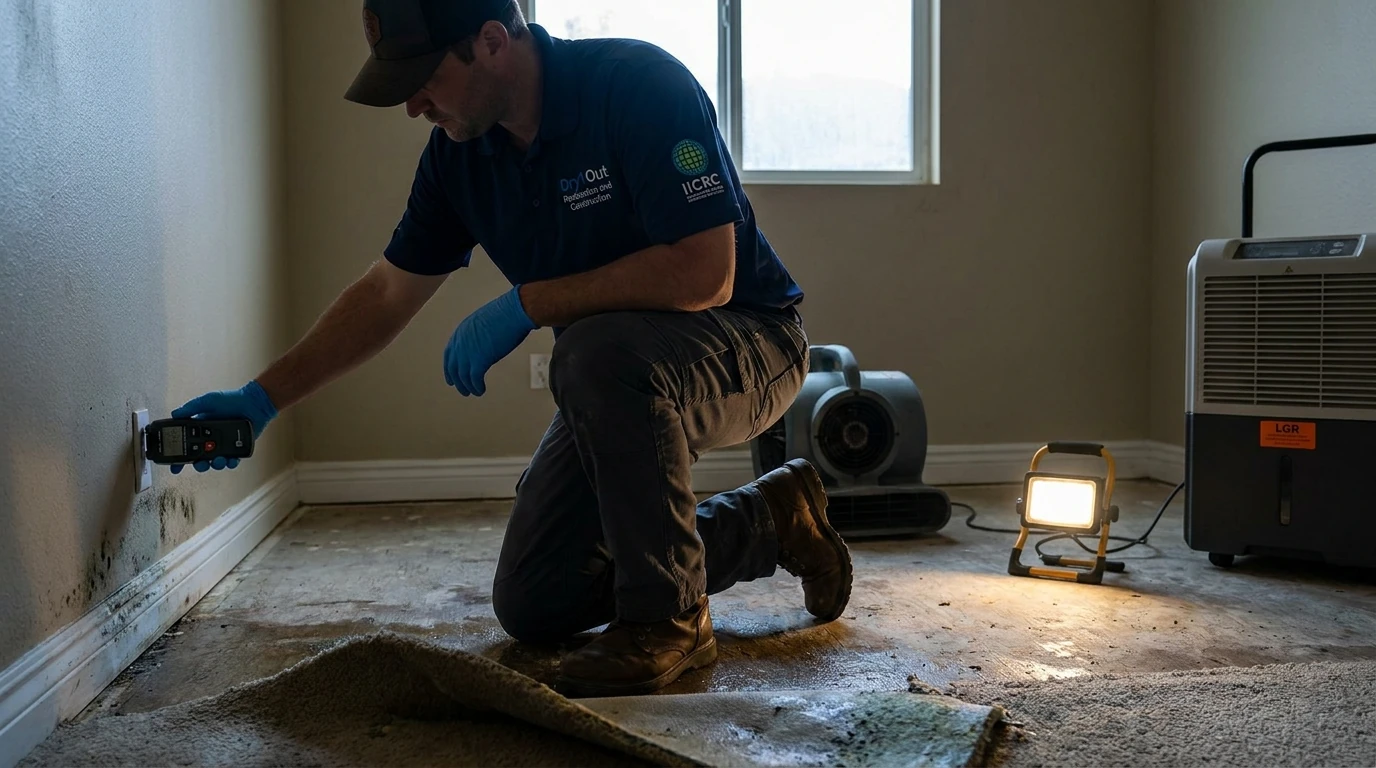
Mold can begin colonizing wet building materials in as little as 24 to 48 hours after water exposure, and visible growth is often possible within 3 to 5 days if the area stays damp. The exact timeline depends on humidity, temperature, and how much moisture is trapped behind walls or under flooring, but the short version is this: the clock starts the moment water touches a porous surface, not when you notice a smell or a stain. If a pipe burst, a roof leaked, or an appliance overflowed more than two days ago and the area hasn’t been fully dried, there’s a real chance mold has already started.
The 24 to 48 Hour Window
Mold spores exist almost everywhere, indoors and out, waiting for the right conditions. Give them moisture, a food source like drywall paper, wood, or dust, and a temperature between roughly 60 and 80 degrees, and they’ll germinate fast. In Vista’s mild climate, indoor temperatures sit in that comfort range nearly year-round, which means the biggest variable isn’t heat, it’s how long the material stays wet. A spill that’s mopped up and dried within hours rarely becomes a problem. Water that soaks into carpet padding, baseboards, or the underside of cabinetry and sits there overnight is a different story.
The tricky part is that early mold growth isn’t always visible. It can start inside wall cavities, under vinyl flooring, or behind baseboards long before a dark spot shows up on a painted surface. By the time you can see or smell it, the colony has usually had several days to establish itself.
What’s Actually Happening Behind the Wall
Drywall and wood framing can look and feel dry to the touch within a day of a leak, even while the material several layers in is still saturated. This is especially true in homes with slab foundations, common throughout North County San Diego tract housing built from the 1950s through the 1970s, where a slow leak under a slab can wick moisture up into wall framing for weeks without an obvious puddle ever forming. Older homes with original galvanized plumbing add another wrinkle: pinhole leaks inside a wall can go undetected until a musty smell or a soft spot in the drywall gives it away, and by then the moisture has often been working on that cavity for a while.
Immediate Steps That Slow Mold Growth
If you’ve just discovered standing water or a fresh leak, the first few hours matter more than almost anything that happens after.
- Stop the water source. Shut off the supply line to the fixture or appliance, or close the main shutoff valve if you can’t isolate the leak.
- Remove standing water. A wet vac, mop, or towels can pull out surface water fast. The less time water sits, the less it soaks into subfloor and framing.
- Move and elevate belongings. Pull furniture, rugs, and boxes off wet flooring so air can reach the surface underneath.
- Increase air movement. Open windows if the outdoor humidity is lower than indoors, and run fans across wet areas. Vista’s dry coastal air is often an advantage here compared to more humid inland regions.
- Run a dehumidifier if you have one. Pulling moisture out of the air slows how fast materials reabsorb humidity as they try to dry.
- Document everything. Photos and a timestamp of when you found the water matter if you end up filing an insurance claim.
What Not to Do
- Don’t close up the room and wait. Sealing a wet room without ventilation traps humidity and speeds up mold growth rather than slowing it.
- Don’t paint or caulk over a damp surface. Trapping moisture under new paint just hides a problem that’s still developing underneath.
- Don’t assume a damp smell will go away on its own. A persistent musty odor almost always means moisture is still present somewhere in the material.
- Don’t pull up flooring or cut into drywall without protection if you already see visible mold. Disturbing a colony can release spores into the air and spread contamination to rooms that were previously unaffected.
- Don’t rely on bleach on porous materials like drywall or wood framing. Bleach can lighten surface staining but doesn’t reach mold growing inside porous material, which means it often returns.
When to Call a Professional
A small, fresh spill that you catch and dry within a few hours usually doesn’t need a restoration crew. Call a water damage restoration professional if any of the following apply: water came from a source other than clean tap water (a toilet, a sewer backup, or floodwater), the water sat for more than 24 hours before you discovered it, water reached wall cavities, subfloor, or insulation, or you’re dealing with more than a small, contained area. Professional drying uses moisture meters and commercial air movers to verify that framing and subfloor are actually dry, not just dry on the surface, which is the detail that prevents a leak from turning into a mold problem weeks later.
If you’re already seeing discoloration, smelling a persistent musty odor, or finding soft, bubbled drywall, that typically points to active mold growth rather than just water damage, and that’s a mold remediation question rather than a drying question. Remediation work is handled differently from a standard dry-out: it involves containing the affected area, removing contaminated material that can’t be cleaned, and verifying the space afterward rather than just running fans and hoping for the best.
The Longer Recovery Process
Water damage drying typically follows the IICRC S500 standard, which outlines how long materials need to be monitored and at what moisture levels a space is considered dry. For a contained leak, that process might run a few days. For water that reached framing, subfloor, or insulation, it can take longer, since wood and the material inside wall cavities release moisture much more slowly than drywall surfaces do.
If mold has already started, remediation adds steps beyond drying: isolating the work area to keep spores from spreading to the rest of the home, removing and disposing of contaminated porous materials like drywall or insulation that can’t be sanitized, and cleaning surfaces that can be salvaged. Once the affected materials are out and the space is dried and cleaned, reconstruction, new drywall, flooring, or trim, brings the room back to its original condition.
If you’re standing in a damp room right now trying to decide whether this is a weekend DIY job or something bigger, the timeline is the thing to weigh most heavily. Water that’s been sitting for more than a day, or that reached wall cavities and subfloor, is worth a professional assessment before you make that call yourself. Dry 1 Out Restoration and Construction serves Vista and the surrounding North County area and can be reached at (888) 379-1688 to talk through what you’re seeing and whether it’s time for a moisture inspection.