24/7 Emergency Storm Damage Restoration in Vista
24/7 emergency storm damage restoration in Vista and surrounding areas. IICRC-certified, insurance billing accepted. Call (888) 379-1688.
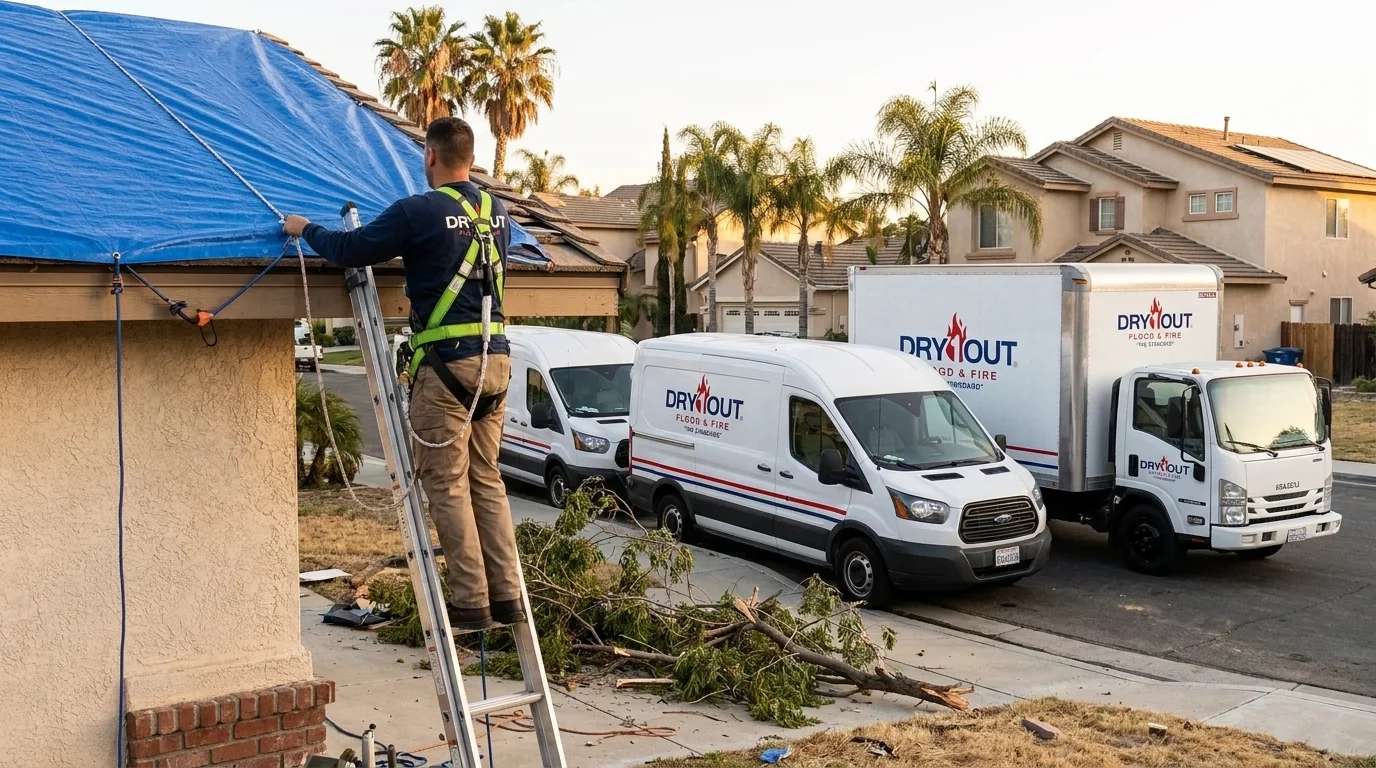
Storm damage emergency in Vista? We answer 24/7. A downed tree through the roofline, a blown-out window letting wind-driven rain into the attic, or a fence and patio cover flattened by Santa Ana gusts all need the same thing first: the structure secured before more water or debris gets in. Call (888) 379-1688 and we’ll get a crew assessing the damage and tarping or boarding the opening the same day.
What Storm Damage Restoration actually involves
Storm damage restoration is really two jobs layered together: stopping active intrusion (wind, rain, debris) and then addressing whatever got in before the structure was secured. That might mean a tarp over a section of torn roofing, plywood board-up on a shattered window or sliding door, and extraction of water that drove in sideways under eaves and around flashing that was never designed for horizontal rain. Where a tree limb or whole tree has come down on a roof, carport, or fence line, we coordinate safe removal before any drying or repair work starts, since a compromised roof structure under a downed tree is not safe to walk until it’s been stabilized. Once the building is weather-tight, the work shifts to drying framing and insulation, assessing shingles, decking, and flashing for wind uplift damage, and documenting everything for the claim. Timeline varies widely: a tarp-and-dry-out job might wrap in a few days, while storm damage involving structural framing or extensive interior water intrusion can run several weeks once reconstruction is factored in.
Our process
- Safety and structural check. Before anyone goes near standing water or a holed roof, we check for compromised framing, downed power lines, and unstable trees or limbs still resting on the structure.
- Emergency tarping or board-up. Roof openings get tarped, broken windows and doors get boarded, and any active water intrusion point gets stopped so the loss doesn’t keep growing while repairs are scoped.
- Water extraction and drying. Wind-driven rain that’s gotten into wall cavities, attic insulation, or flooring is extracted and dried using the same moisture-mapping approach we’d use on any water loss, because storm water behaves like any other Category 1 or 2 intrusion once it’s inside the building.
- Debris and tree removal coordination. Fallen limbs, fencing, and roofing debris get cleared so our team and any trades can safely access the damaged area for permanent repair.
- Documentation and repair scope. Photos, moisture readings, and a written scope go to you and your adjuster, covering everything from temporary protection to the reconstruction needed to close out the claim.
What separates a good storm damage response from a bad one
The most common mistake we see is a tarp or board-up that’s treated as the finished job instead of a temporary hold. A tarp that isn’t secured properly to the decking will lift in the next wind event and let in more water than the original damage did, undoing the point of doing it at all. Another is skipping moisture readings on areas that look dry from the outside, wind-driven rain often tracks sideways under siding and roofing and shows up as a hidden wet spot in drywall or subfloor days later, not at the point of entry. Adjusters reviewing storm claims generally want clear photos of the damage before any tarping or cleanup, a specific cause of loss (wind, tree impact, hail), and moisture documentation showing the extent of water intrusion, not just a general description of “storm damage.” A thorough response also separates wind damage from flood damage on the scope, since those are typically covered under different parts of a homeowners or commercial policy.
What does Storm Damage Restoration cost?
Costs depend heavily on whether the loss is limited to temporary protection and minor water intrusion or involves structural repair, tree removal, and reconstruction. Every loss gets a written scope before work begins, since the range between a tarp job and a full roof-and-interior rebuild is large. Homeowners insurance typically covers sudden, storm-related damage like wind-driven rain intrusion, tree impact, and wind uplift, though policies usually distinguish wind damage from separately-rated flood coverage.
| Scenario | Typical range |
|---|---|
| Emergency tarp, single roof section | $400 - $1,200 |
| Window or door board-up | $250 - $800 |
| Wind-driven rain water extraction and drying (one or two rooms) | $1,500 - $4,500 |
| Tree removal from structure plus roof stabilization | $2,000 - $8,000 |
| Interior water damage plus roof and framing repair | $8,000 - $25,000+ |
Seasonal & regional considerations
Vista’s storm risk comes in two distinct forms: winter atmospheric river systems that bring sustained, wind-driven rain over several days, and Santa Ana wind events that can down trees and strip roofing even without rain. Older roofs on the area’s mid-century and 1970s-80s housing stock are more prone to wind uplift at the ridge and eaves, and homes with mature eucalyptus or pine trees close to the structure carry higher risk of limb or full-tree impact during wind events. Hurricane and tornado damage cleanup, while far less common inland in San Diego County than on the coast or in other regions, follows the same tarping, extraction, and drying process once a structure has been breached.
Service area
Dry 1 Out Restoration and Construction responds to storm damage throughout Vista and surrounding North County communities including Oceanside, Carlsbad, San Marcos, Escondido, and Fallbrook.
If a tree, torn roofing, or wind-driven rain has breached your home or building, call (888) 379-1688 to get a crew out to secure the structure and start the drying process before the damage spreads further.
Services We Handle
- Emergency Storm Damage Repair
- Hurricane Damage Restoration
- Storm & Wind Damage Restoration
- Wind Damage Repair
Frequently Asked Questions
Does homeowners insurance cover storm damage restoration?
How quickly do you tarp a roof or board up a broken window after a storm?
A tree fell on my roof. Is it safe to go inside before you arrive?
Can wind-driven rain cause mold even if my roof wasn't visibly damaged?
What's the difference between wind damage and flood damage for insurance purposes?
Looking for the best storm damage restoration company in Vista?
Dry 1 Out Restoration and Construction provides licensed and insured storm damage restoration in Vista, CA and the surrounding area, and has served local property owners since 2026. Customers rate us 5.0 out of 5 stars across 18 Google reviews. We answer calls 24/7 — call (888) 379-1688 for immediate help.
Need Storm Damage Restoration now?
We respond 24/7 across Vista and surrounding CA cities.
Related Coverage
- Our Restoration Services
- Contact Dry 1 Out Restoration and Construction
- Restoration Services in Berkeley
- Restoration Services in Carlsbad
- Restoration Services in Chula Vista
- Restoration Services in Concord
- Restoration Services in El Cajon
- Restoration Services in Encinitas
- Restoration Services in Escondido
- Restoration Services in Fremont
- Restoration Services in Hayward
- Restoration Services in Oakland
- Restoration Services in Oceanside
- Restoration Services in San Diego
- Storm Damage Insurance Claim Checklist (Use This Before You Call Your Insurer)