TL;DR: In Vista, CA, a professional mold inspection typically costs $200 to $800, depending on whether it’s a visual-only walkthrough, air sampling, surface sampling, or a full assessment with moisture mapping. Lab analysis for air and surface samples usually adds $25 to $75 per sample on top of the inspection fee. Post-remediation clearance testing, done after mold removal to confirm the work succeeded, typically runs $300 to $600 as a separate service.
If you just noticed a musty smell in a hall closet near Buena Creek or a water stain spreading across a ceiling in a Shadowridge rental, you’re probably trying to decide between a $20 hardware-store test kit and a real inspection. The answer usually comes down to what’s actually at stake: a home sale, a tenant dispute, a health concern, or confirming that a remediation job actually worked. Here’s what mold inspection and testing actually costs around Vista, and what each price level gets you.
How Much Does Mold Inspection Cost in Vista, CA?
A mold inspection in Vista typically costs between $200 and $800, with most single-family home inspections landing in the $300 to $500 range once sampling is included. The final number depends almost entirely on whether the inspector stops at a visual walkthrough or adds lab-tested samples.
| Inspection Type | Typical Cost |
|---|---|
| Visual inspection only (no samples) | $200 - $350 |
| Visual inspection + air sampling (2-3 samples) | $300 - $600 |
| Visual inspection + surface/swab sampling | $250 - $500 |
| Comprehensive assessment (air + surface + moisture mapping) | $450 - $800 |
| Post-remediation clearance test | $300 - $600 |
| Larger homes or commercial properties | $800 - $2,000+ |
These figures reflect typical ranges reported across Southern California, not a quote for any specific property. Most cover the inspector’s time and a set number of samples; lab analysis is often billed separately at $25 to $75 per sample, so a report built on five or six samples can add $150 to $400 to the total. Every property is different, which is why a written scope before work begins matters more than any published range.
What’s Included in a Mold Inspection?
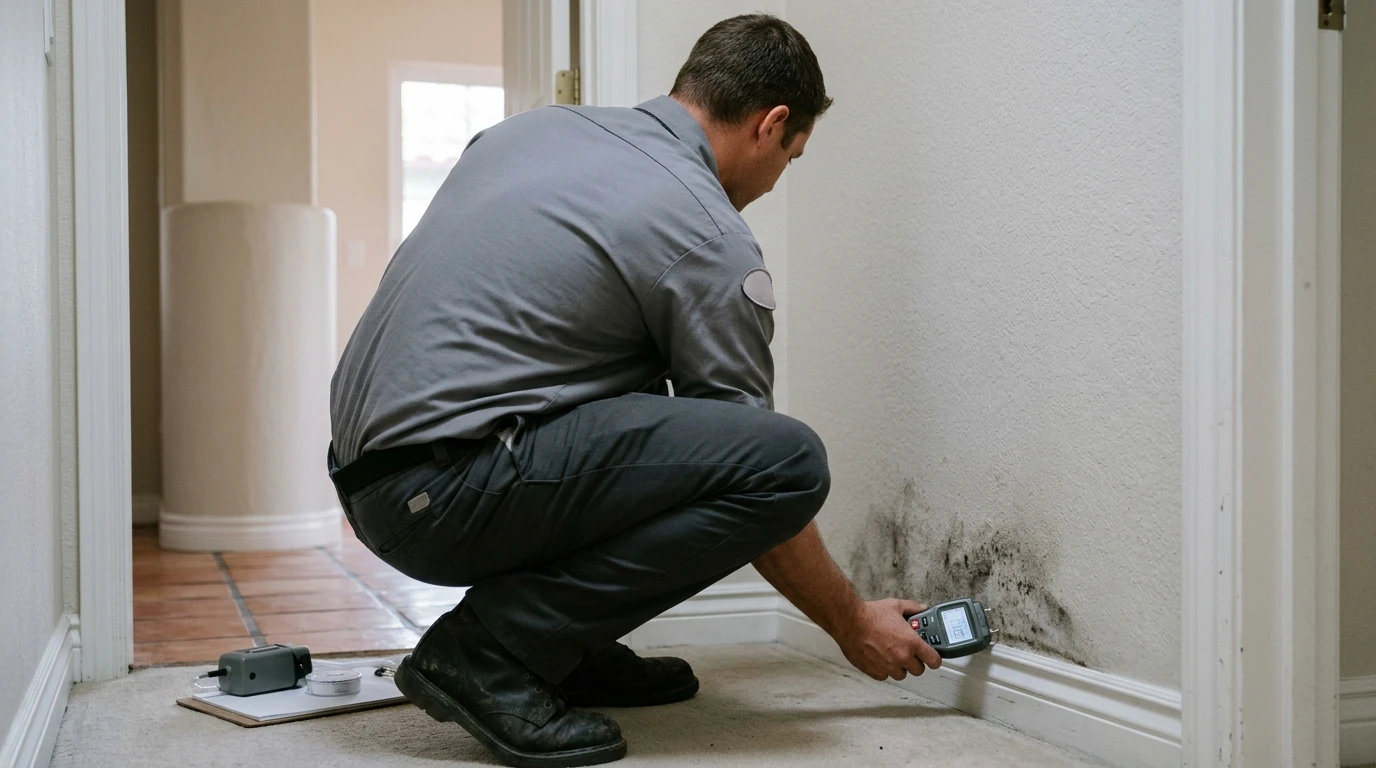
A real mold inspection combines a visual walkthrough with moisture measurement, not just a glance at visible staining. The inspector documents what they see, then measures what they can’t see with a tool.
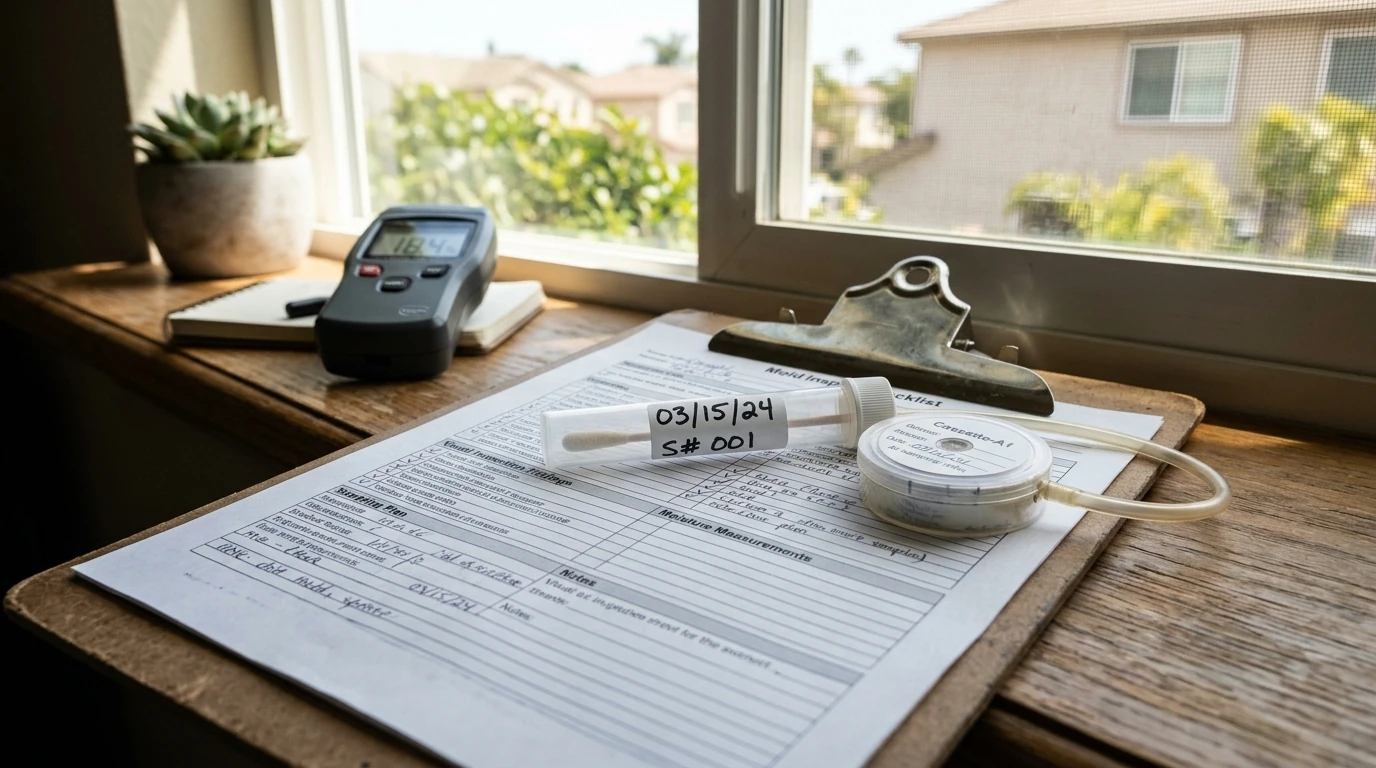
That typically means a moisture meter or thermal camera check along walls, baseboards, and ceilings near any known leak history, plus a visual check of attics, crawlspaces, and HVAC components where moisture collects. If anything looks suspicious, air sampling and surface sampling come next. Air sampling pulls a set volume of air through a cassette, usually one outdoor control sample plus one or more indoor samples, so a lab can compare indoor spore counts and types to the baseline outside air. Surface sampling (a tape lift or swab) identifies what’s actually growing on a specific stain or discoloration. Both get sent to an independent lab, and results usually take 3 to 5 business days.
The inspection ends with a written report: findings, moisture readings, lab results, and a recommendation on whether remediation is needed and how large the affected area is.
What Factors Affect the Price?
The biggest cost drivers are the number of samples, the size of the property, and how hard the suspect areas are to access. A crawlspace or attic inspection takes longer and often costs more than a single closet.
The reason for the inspection also matters. A pre-purchase inspection for a real estate transaction usually covers the whole structure, which costs more than a targeted check of one bathroom with a known leak. Rush turnaround on lab results, inspections tied to a tenant dispute that require a more detailed report, and larger square footage all push the price toward the higher end of the range. Older homes near Downtown Vista and the Buena Creek area, where original plumbing and older roof flashing are more common, sometimes need a more thorough moisture-mapping pass than newer construction in Vista Business Park or Shadowridge.
Does Homeowners Insurance Cover Mold Inspection?
Most homeowners policies do not cover a standalone mold inspection paid out of curiosity or for a real estate transaction. Coverage typically only applies when the inspection is tied to a sudden, covered water loss, like a burst pipe, not a long-term leak or humidity issue.
Even then, many policies cap mold-related coverage at a low dollar amount regardless of the covered source. If you’re filing a claim, document the water event with photos and keep every receipt, since mitigating promptly protects the claim (see our full breakdown of what homeowners insurance actually covers for water damage). The Insurance Information Institute has more detail on how standard policies typically treat mold. When in doubt, call your insurer before you book an inspection so you know whether it’s reimbursable.
What Happens After the Inspection?
If the report confirms active mold growth, the next step is a written remediation scope, not a guess at square footage. The inspection report becomes the baseline the remediation crew works from.
- Containment and removal. Affected porous materials (drywall, insulation, carpet) are typically removed rather than cleaned, following the ANSI/IICRC S520 standard for mold remediation.
- HEPA filtration and drying. Air scrubbers run during the work, and any moisture source gets dried or repaired so the mold doesn’t return.
- Post-remediation clearance testing. An independent, third-party test confirms spore counts have returned to a normal range before the area is closed back up. This is the $300 to $600 line item from the table above, and it’s worth paying for separately from the remediation contractor to keep the result unbiased.
For the remediation cost itself rather than the inspection, see our Vista mold remediation cost guide.
Is an Inspection Worth It, or Should You Go Straight to Remediation?
If mold is visible, covers less than about 10 square feet, and you know the moisture source, many homeowners skip straight to remediation and skip the inspection fee. That’s often reasonable for a small, obvious patch.
An inspection earns its cost when the mold isn’t visible but you can smell it, when you’re buying or selling a home and need documentation, when a tenant has raised a health complaint, or when you want proof the air is clear after remediation. The EPA’s guide to mold and moisture notes that mold can begin growing on wet materials within 24 to 48 hours, so a documented moisture source and a quick inspection often cost less than waiting to see how far it spreads. If you’re not sure which category your situation falls into, our guide on how to test for mold yourself versus hiring a pro walks through the decision in more detail.
If you’re in Vista and want a documented assessment before deciding on next steps, request a mold inspection from Dry 1 Out Restoration and Construction or call (888) 379-1688 to talk through what you’re seeing.
About Dry 1 Out Restoration and Construction
Dry 1 Out Restoration and Construction is an IICRC Certified Firm serving Vista, CA (license #993442) from offices in Vista and Hayward. Their crews hold IICRC credentials in water, structural drying, mold (AMRT), and fire and smoke restoration, and handle mold inspection, testing, and remediation alongside water, fire, and storm damage recovery across North San Diego County and the Bay Area. Jason Pacheco contributed reporting for this guide.