TL;DR: For water damage in Hayward, CA, call a licensed water damage restoration company first if the source is stopped or stoppable. Call a plumber first only if water is still actively flowing and no one can shut it off. Call 911 or PG&E first if there’s a fire, gas smell, or standing water near an electrical panel. Dry 1 Out Restoration and Construction answers 24/7 at (888) 379-1688 and handles extraction, drying, and the insurance paperwork from there.
If you’re standing in Fairway Park or the Hayward Highlands right now watching water spread across the floor from a burst supply line or an overflowing washing machine, the order of calls matters more than you’d think. Call the wrong person first and you lose time. Call the right one and the drying clock starts within the hour, which matters because materials that stay wet past 24 to 48 hours start growing mold.
Who should I call first for water damage in Hayward?
Call a water damage restoration company first whenever the water source has already been stopped, which is the most common scenario (a burst pipe behind a wall, a dishwasher line that failed overnight, a roof leak after the first rain). Dry 1 Out Restoration and Construction is IICRC Certified and answers calls 24/7 at (888) 379-1688, with a 5.0 Google rating from 21 reviews.
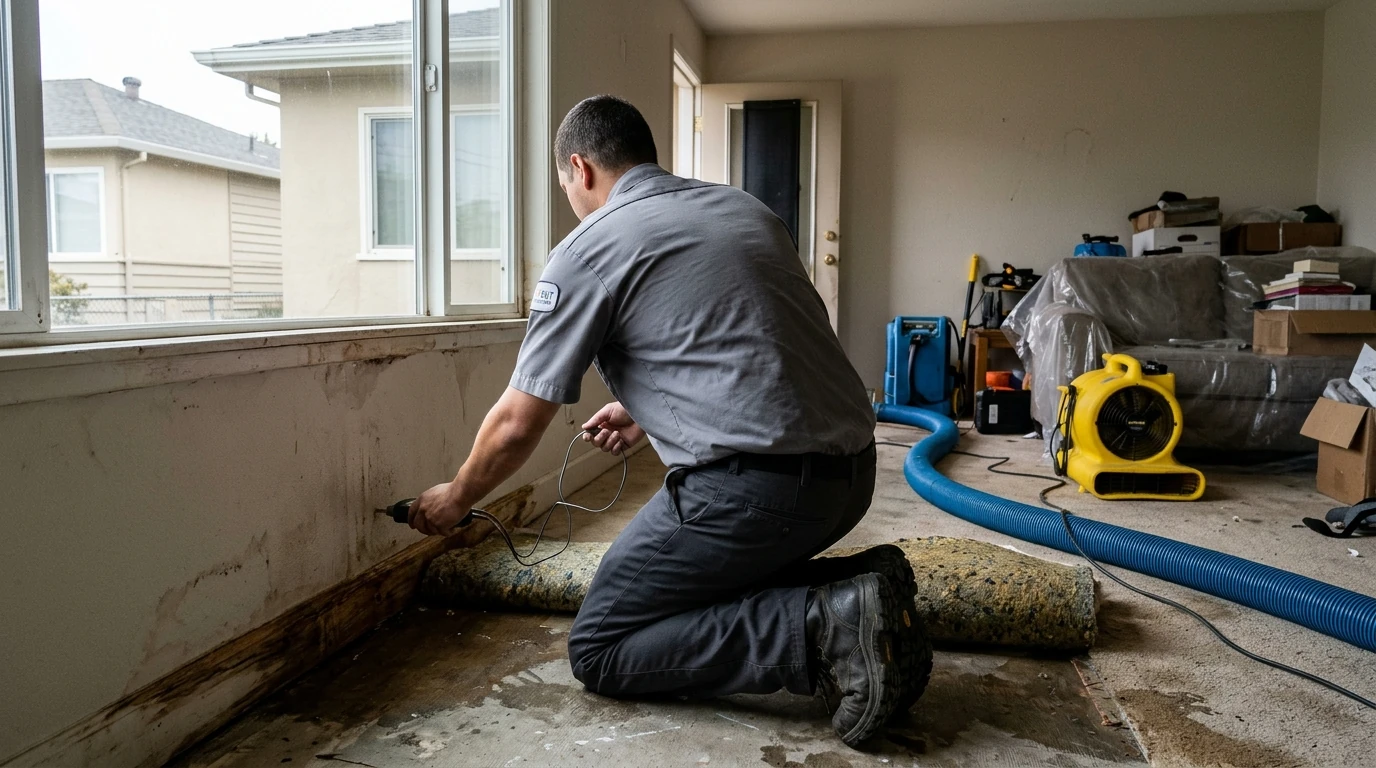
The reason restoration comes before insurance or cleanup crews you find online: a restoration company extracts standing water, sets drying equipment, and documents the loss with moisture readings and photos the same visit. That documentation becomes the backbone of your insurance claim, and the faster drying starts, the less demolition is needed later.
When should I call a plumber instead?
Call a plumber first only when water is still actively running and the source can’t be shut off at the main or a local valve. A restoration crew can extract water and set up drying, but they don’t fix a split pipe or a failed water heater, that’s plumbing work.
In practice, most Hayward calls need both: a plumber stops the leak (or you find the shutoff yourself, usually a valve near the water meter or under the fixture), then a restoration company handles everything the water left behind. If you can stop the flow yourself, do that first, then call restoration, since every extra minute of standing water adds to the drying timeline.
When is this a 911 or utility call, not a restoration call?
Call 911 or your utility first whenever there’s an active safety hazard: standing water near an electrical panel or outlets, a gas smell, or structural sagging in a ceiling that looks ready to collapse. Those situations need the power or gas shut off before anyone, including a restoration crew, can safely work in the space.
Once the hazard is controlled, water damage restoration picks up from there. Don’t try to shut off a breaker while standing in water, and don’t re-enter a room with a bulging, water-logged ceiling until it’s been checked.
What about calling my insurance company first?
Call your insurance company after mitigation has started, not before. Most homeowners policies require you to take reasonable steps to prevent further damage, so stopping the water and starting extraction first actually protects your claim rather than delaying it.
A restoration company that documents the loss properly, photos, moisture maps, a written scope, gives your adjuster what they need without you having to explain the damage yourself. For a broader look at what’s typically covered (a sudden burst pipe usually is, a slow leak you ignored for months usually isn’t) see our explainer on homeowners insurance and water damage. If the water came from a backed-up drain or sewer line, that’s Category 3 black water, and most standard policies only cover it with a separate water backup endorsement, worth checking before you assume it’s included.
What happens after you call?
The first call is a short triage conversation: what’s flooded, how long it’s been wet, and whether the source is stopped. Have your policy number handy if you have it, but don’t wait on insurance to make the call.
On arrival, a technician checks the water category, measures moisture in walls and flooring with a meter, and sets up extraction and air movers or a dehumidifier right away. Materials that can be saved get dried in place following the IICRC S500 standard; materials that can’t (saturated drywall, swollen baseboard) get removed before mold has a chance to start. For a sense of the full timeline from day one to the final moisture check, see what to do in the first 24 hours after water damage.
If you’re in Downtown Hayward, near Cal State East Bay, or out toward the shoreline neighborhoods and water is spreading right now, the fastest move is one call to get extraction started before the drying window closes. Call Dry 1 Out at (888) 379-1688 to get a technician scheduled and the documentation started.