In Hayward, CA, cleaning up a sewage backup typically costs between $1,500 and $35,000, depending on how far the contaminated water traveled and how many porous materials it touched. A single bathroom backup contained to tile flooring sits at the low end. A backup that floods a finished basement or reaches drywall, insulation, and framing in multiple rooms sits at the high end. Sewage is Category 3 water, sometimes called black water, and it is never a DIY cleanup. It carries bacteria and pathogens that require professional extraction, removal of contaminated materials, and antimicrobial treatment before the space is safe to rebuild.
What does sewage backup cleanup cost by scope in Hayward?
The price scales with how much square footage the sewage reached and which materials had to come out, not just the number of gallons on the floor. Here’s what Hayward homeowners typically see by scope:
| Scope of sewage backup | Typical cost range |
|---|---|
| Single bathroom, contained to tile or vinyl flooring | $1,500 - $3,500 |
| Bathroom plus hallway, carpet and pad removed | $3,000 - $6,000 |
| Multiple rooms, drywall flood cuts and insulation removal | $6,000 - $12,000 |
| Finished basement or crawlspace backup | $8,000 - $20,000+ |
| Whole-house backup from a main line failure | $15,000 - $35,000+ |
These are typical industry ranges, not a quote. Every job gets a written scope once a technician has eyes on the damage, because Category 3 water hides in places you can’t see from the doorway, under baseboards, inside wall cavities, under cabinet toe-kicks.
What drives the price up or down?
Four factors matter most: how long the sewage sat before cleanup started, how far it traveled, which materials got wet, and whether the home needs reconstruction once it’s dry.
- Dwell time. Sewage that sits for hours wicks higher into drywall and deeper into subfloor, which means more material removal instead of in-place drying.
- Materials affected. Carpet and pad almost always get removed and discarded after Category 3 contact. Drywall usually needs a flood cut, a clean horizontal cut a foot or more above the waterline, so the wet, contaminated section comes out and the rest stays.
- Fixtures involved. A single toilet overflow is a smaller job than a floor drain backup that pushed sewage across a finished basement.
- Reconstruction scope. Cleanup and drying are one invoice. Replacing drywall, baseboard, flooring, and repainting is a separate phase, and it’s where whole-room jobs climb toward the higher end of the range.
Does homeowners insurance cover sewage backup cleanup?
Most standard homeowners policies exclude sewer and drain backup unless you’ve added a water backup (sometimes called sewer backup) endorsement to the policy. Without that endorsement, a sewer backup claim is usually denied, even though a burst pipe inside the home would typically be covered.
The endorsement is a low-cost rider most insurers offer, and it adds a set coverage limit, often $5,000 to $25,000, specifically for sewer and drain backup and sump pump failure. If you have it, your insurer’s claims process still requires documentation: photos before anything is touched, a written scope from the restoration company, and receipts for any discarded materials. Our breakdown of what homeowners insurance actually covers for water damage walks through the sudden-versus-gradual distinction that also applies here. For the general rule on what standard policies do and don’t cover, the Insurance Information Institute’s guide to disaster coverage is a useful reference before you call your agent.
Who pays when a Hayward sewer line backs up, the city or the homeowner?
It depends on which pipe failed. The City of Hayward owns and maintains the sewer main running under the street. The homeowner owns and maintains the private lateral, the pipe that connects the house to that main, typically from the foundation to the property line or the main connection point.
If a blockage or collapse in the city main pushed sewage back into your home, the city may bear responsibility for cleanup costs, and you should report the overflow to Hayward’s public works department promptly and keep photos and a timeline. If the problem is in your own lateral, root intrusion from a mature tree, grease buildup, or a collapsed clay pipe common in older Hayward homes around Downtown Hayward and Mt. Eden, the repair and cleanup responsibility falls on the homeowner. Either way, document everything before cleanup starts; it protects both an insurance claim and any potential claim against the city.
What happens during professional sewage cleanup?
A Category 3 cleanup follows a set sequence, built around the ANSI/IICRC S500 water damage restoration standard:
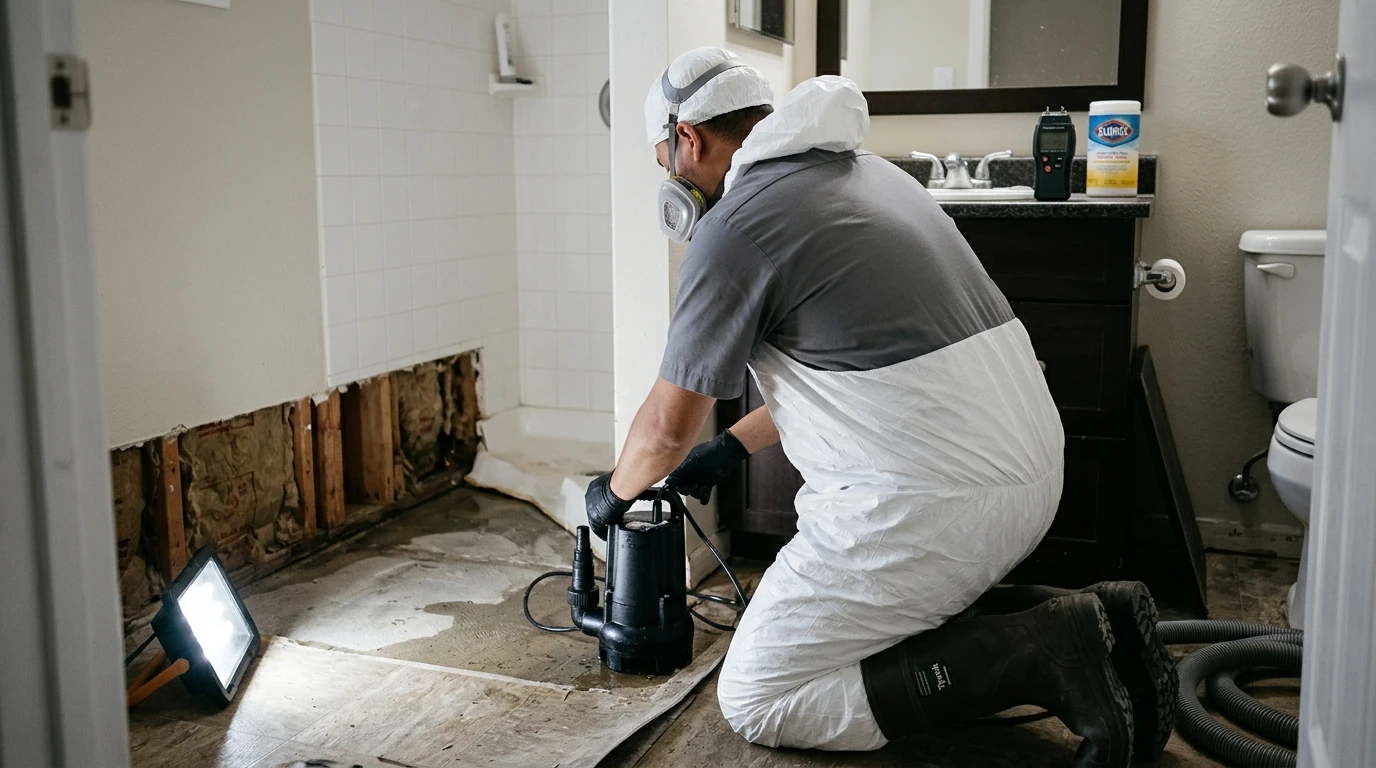
- Safety assessment and containment. Technicians suit up in PPE and seal off the affected area to stop cross-contamination.
- Extraction. Standing sewage and water get pumped and vacuumed out immediately.
- Removal of contaminated materials. Carpet, pad, and any drywall or insulation that absorbed sewage comes out, since Category 3 water usually can’t be dried in place.
- Cleaning and antimicrobial treatment. Remaining surfaces get cleaned and treated to address bacteria and odor.
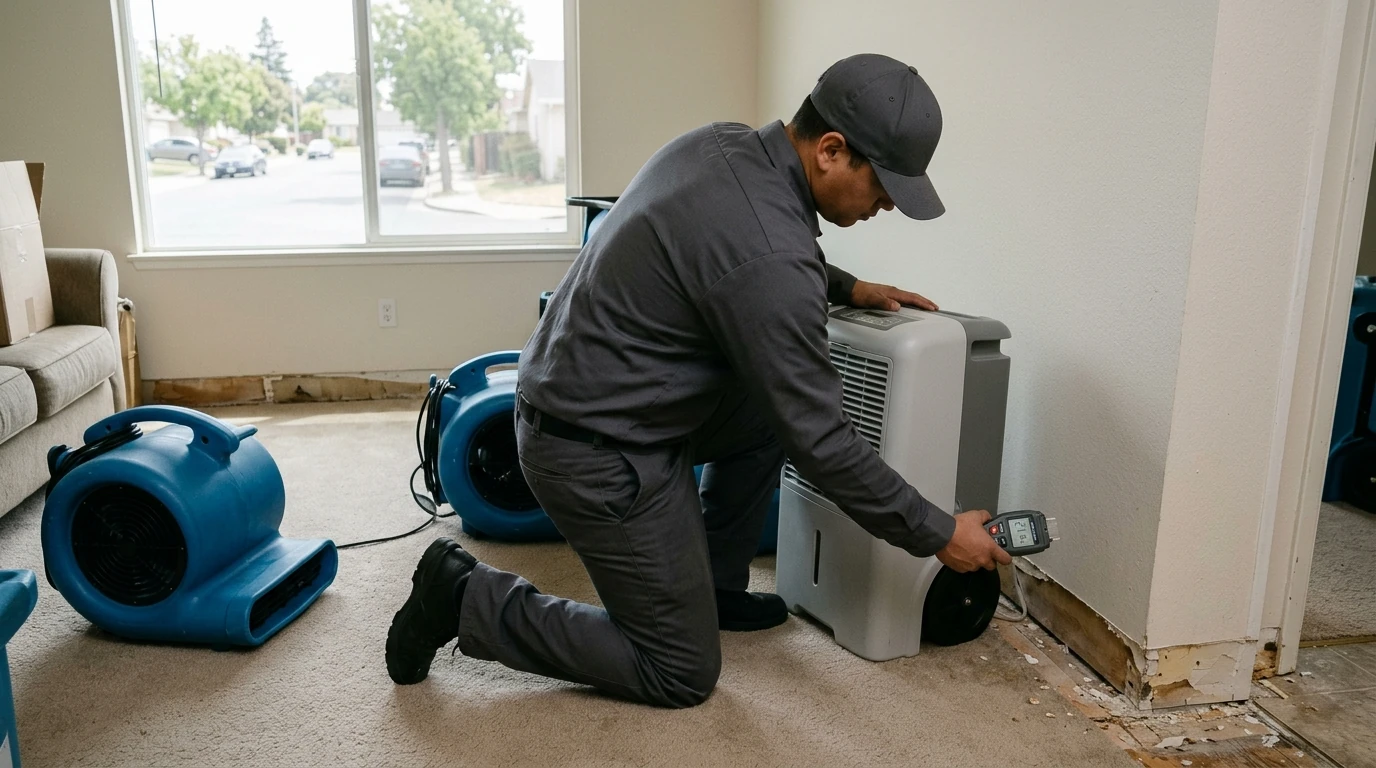
- Structural drying. Air movers and dehumidifiers run until moisture readings confirm the structure is dry, not just dry to the touch.
- Clearance check. A final moisture and visual check before any rebuild starts.
- Reconstruction. Drywall, baseboard, flooring, and paint go back in once the space is confirmed dry.
Some jobs also involve water damage restoration equipment for the drying phase, and more extensive contamination sometimes overlaps with biohazard cleanup protocols when the backup has sat long enough to pose a significant exposure risk.
How long does sewage cleanup take?
Most sewage backups take 3 to 7 days from the first call to a dry, treated structure, with reconstruction adding separate time if drywall or flooring needs replacing. Extraction and material removal usually happen on day one. Drying typically runs 3 to 5 days, checked daily with a moisture meter rather than guessed at. A straightforward bathroom job might close out faster; a multi-room backup with flood cuts and insulation replacement runs toward the longer end, and reconstruction on top of that is scheduled separately once the space is confirmed dry.
If you’re dealing with a backup right now, stop using water in the affected fixtures, avoid walking through standing sewage, and call for an assessment before anything gets disturbed. Dry 1 Out Restoration and Construction, with crews based in both Vista and Hayward, documents the scope in writing before work starts. If you’re in North San Diego County, see our Vista sewage backup cost guide. Request a sewage cleanup assessment or call Dry 1 Out Restoration and Construction at (888) 379-1688 to get a technician on-site.
About Dry 1 Out Restoration and Construction
Dry 1 Out Restoration and Construction is an IICRC Certified Firm (license #993442) that has served North San Diego County from Vista and the Bay Area from Hayward since 1998. Their crews handle sewage cleanup, water damage restoration, mold remediation, fire and smoke restoration, biohazard cleanup, and reconstruction, and the business answers calls 24/7.