
The Short Answer
Most water damage restoration projects take anywhere from three days to two weeks from the moment water is extracted to the moment the space is fully dry and ready for repairs. Simple situations, like a water heater that leaked onto a tile floor and got caught quickly, can wrap up in three to five days. More involved losses, like a burst supply line that soaked carpet, drywall, and subfloor overnight while nobody was home, often run ten to fourteen days before drying equipment comes out and rebuild work starts. The timeline is driven by three things: how much water got in, what materials absorbed it, and how fast extraction and drying began.
Why the Range Is So Wide
No two water losses behave the same way, which is why “how long will this take” rarely has a one-word answer.
- Category of water matters. Clean water from a supply line dries faster and with fewer material losses than gray water from a dishwasher or black water from a sewage backup, which usually means removing and replacing porous materials rather than drying them in place.
- What the water touched. Water sitting on a sealed tile or laminate floor for an hour is a different job than water that wicked up three feet of drywall and soaked into wall insulation overnight.
- How long it sat before anyone noticed. A leak behind a kitchen cabinet can run for days before the swelling baseboard or the musty smell gives it away, and by then the subfloor, cabinet boxes, and wall cavity may all be saturated.
- Square footage and layout. An open great room with water under the baseboards dries differently than a cluster of small bathrooms and closets where airflow is harder to manage.
- Whether structural materials need to come out. If drywall, insulation, or flooring have to be removed and replaced rather than dried, that adds demolition and rebuild time on top of the drying phase.
The Three Phases of a Typical Job
It helps to think of restoration as three distinct phases, each with its own timeframe.
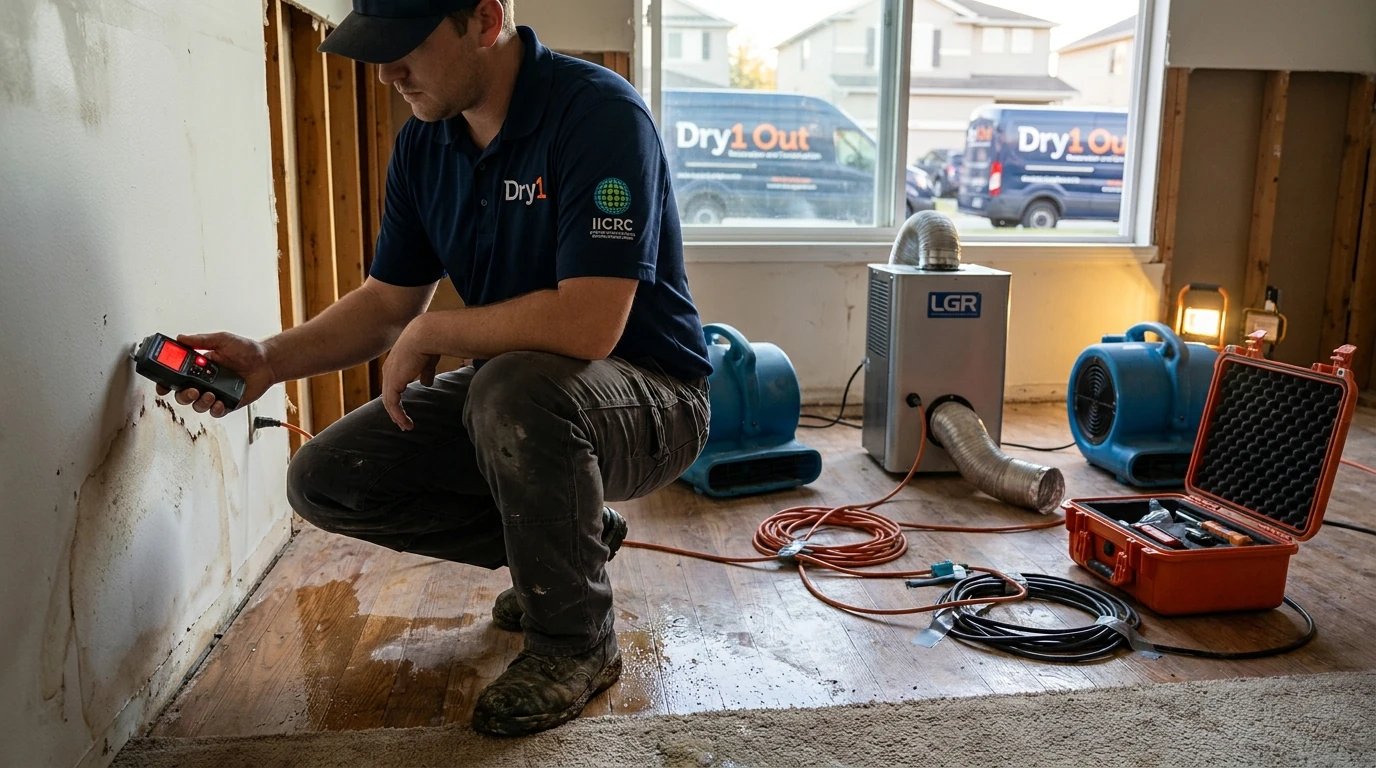
- Extraction and assessment (day one). Standing water gets pumped or vacuumed out, and a technician checks moisture levels in walls, flooring, and subfloor with a moisture meter, not just a visual look. This is also when any materials that are too damaged to dry, like saturated carpet pad or swollen particleboard cabinets, get identified for removal.
- Structural drying (typically three to seven days). Air movers and dehumidifiers run continuously while a technician monitors moisture readings every day or two, adjusting equipment placement as materials dry at different rates. Drying is considered complete when moisture content in the affected materials matches the moisture content of unaffected areas in the same structure, a benchmark drawn from the IICRC S500 water damage restoration standard rather than a fixed number of days.
- Repairs and reconstruction (timeline varies). Once everything reads dry, any drywall, flooring, trim, or cabinetry that had to be removed gets rebuilt. A small drywall patch and repaint might take a day or two; a kitchen that needs new cabinets and flooring can take several weeks, largely driven by material ordering and scheduling rather than the water damage itself.
What Slows the Process Down
A few things reliably stretch a water damage timeline past what it should be:
- Waiting to call anyone. Water that sits for 24 to 48 hours gives mold spores, which are present in virtually every home, enough moisture and time to start colonizing drywall paper and wood framing. Once that happens, drying alone isn’t enough and the scope shifts toward removal and remediation.
- Turning off fans or opening windows mid-dry. Humid outside air coming into a drying structure, especially during Vista’s warmer, more humid stretches in late summer, can undo days of progress by reintroducing moisture the dehumidifiers already pulled out.
- Skipping the moisture check and relying on “it looks dry.” Drywall and flooring often feel and look dry on the surface while the material behind them, like the lath or subfloor, is still wet. Closing up a wall or laying new flooring over a surface that reads dry but isn’t is one of the most common causes of mold complaints months later.
- Insurance delays. If a claim requires an adjuster inspection before work can proceed, that scheduling gap can add days before extraction or drying even starts.
When to Call a Professional
A small, contained spill you can mop up and fan-dry in an afternoon usually doesn’t need a restoration crew. Call a professional when any of the following apply: the water came from a source other than clean tap water (a toilet, washing machine drain, or sewer backup), water has been sitting for more than a few hours, it’s reached carpet, drywall, or subfloor, or you can’t get a moisture meter reading to confirm what’s actually dry versus what just looks dry. A professional can also document the loss with photos and moisture logs, which most insurance carriers want to see before approving a claim.
Getting Through It
The honest answer to “how long will this take” is that it depends on how fast the water gets out and how fast the drying starts, more than almost anything else. If you’re dealing with standing water, a wet wall, or a smell that wasn’t there last week, Dry 1 Out Restoration and Construction in Vista can assess the extent of the water, start extraction, and lay out a realistic drying and repair timeline for your specific situation. Call (888) 379-1688 to talk through what you’re seeing and figure out the right next step.