24/7 Emergency Flood Damage Restoration in Vista
24/7 emergency flood damage restoration in Vista and surrounding areas. IICRC-certified, insurance billing accepted. Call (888) 379-1688.
Flood damage in Vista? We answer 24/7. Floodwater rarely stays where it enters. It moves under baseboards, wicks up drywall, and pools in slab cracks and crawlspace low points long after the rain stops or the creek recedes. By the time carpet feels merely damp to the touch, the subfloor underneath may already be saturated, and contaminated water from storm runoff carries silt, bacteria, and chemical residue that clean-water extraction equipment alone won’t address.
What flood damage restoration actually involves
Flood damage restoration is distinct from a routine appliance leak because of what’s in the water and how much of the structure it touches. Storm floodwater, overflow from a backed-up storm drain, or water that enters through a foundation crack is almost always classified as Category 2 or Category 3 under IICRC S500, meaning it carries contaminants that require different handling, disposal, and personal protective equipment than a clean supply-line break. The work typically spans standing water extraction, removal of flood-contaminated porous materials (carpet pad, baseboards, sometimes drywall up to the flood line), structural drying with commercial air movers and dehumidifiers, and ongoing moisture monitoring until readings return to a dry standard. Depending on how much water entered and how long it sat, this runs anywhere from a few days for a contained single-room intrusion to two or more weeks for a whole-floor flood with saturated framing.
Our process
- Water categorization and safety check. Before anything else, we identify the water source and category, since floodwater is treated differently from a clean-water pipe break, and check for electrical hazards before anyone enters standing water.
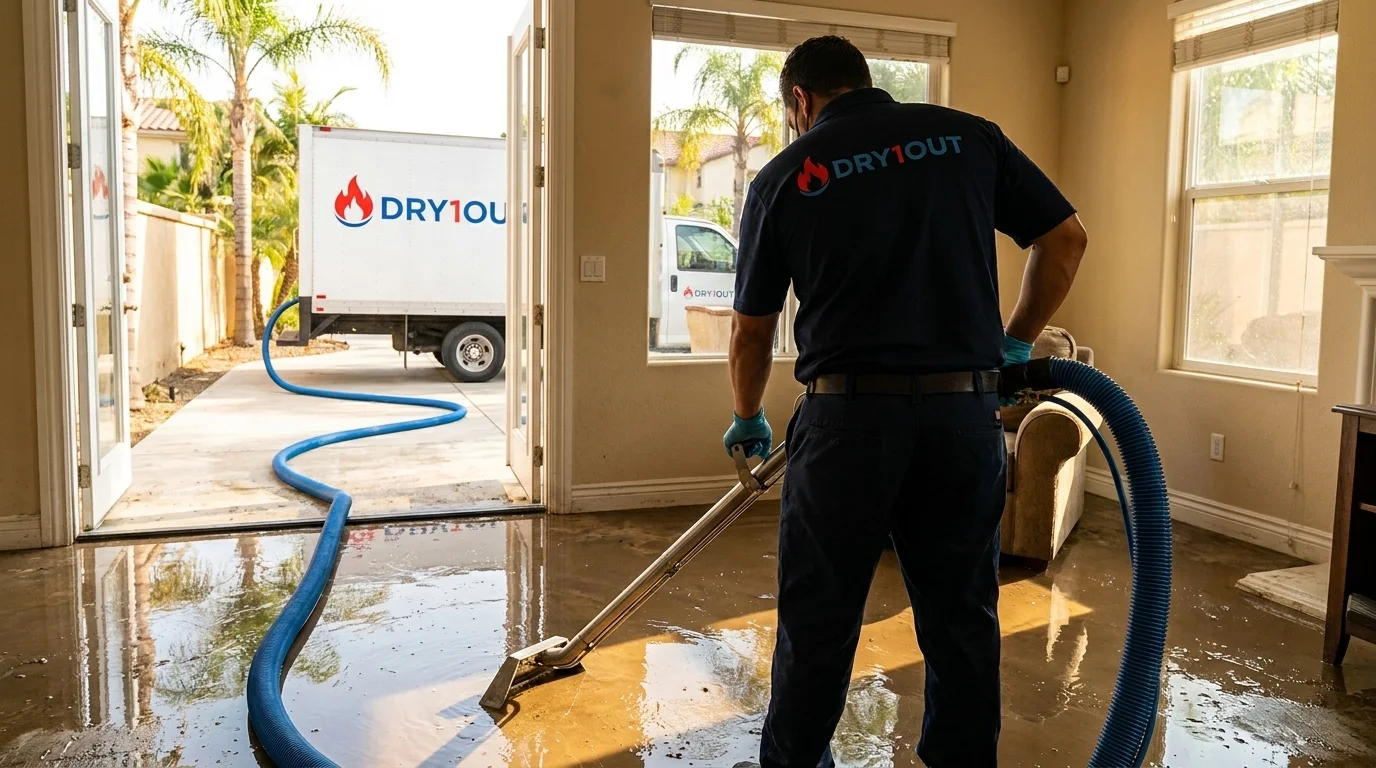
- Extraction and debris removal. Standing water, mud, and silt get pulled out with truck-mount extractors and pumps, and waterlogged debris that can’t be salvaged is removed to stop ongoing contamination.
- Containment and structural drying. Affected areas are set up with air movers, dehumidifiers, and in some cases containment barriers to isolate Category 3 water from unaffected parts of the home while drying equipment runs.
- Moisture mapping and monitoring. We track moisture content in flooring, drywall, and framing with meters daily, adjusting equipment placement until materials reach a verified dry standard rather than guessing by feel.
- Cleaning, disinfection, and documentation. Surfaces that contacted floodwater are cleaned and treated, and photos, moisture logs, and scope notes are compiled for the insurance claim file.
What separates a good flood response from a bad one
The most common mistake is treating floodwater like a clean-water leak: pulling out visible standing water and running a few fans without addressing contamination or checking what’s happening inside wall cavities and under flooring. Carpet and pad that soaked in floodwater usually can’t be saved, no matter how dry they appear on the surface, because bacteria and organic material embed in the fibers. Adjusters pay close attention to moisture documentation, so a response that skips daily readings or doesn’t photograph the water line and affected materials before demolition often runs into coverage disputes later. Drying too fast without addressing the source of water intrusion, like a failed grade or a clogged area drain, also invites repeat flooding on the next storm.
What does flood damage restoration cost?
Costs vary with how much water entered, how long it sat, and whether the water was clean, gray, or Category 3 floodwater requiring contaminated-material removal. Every loss is different, which is why Dry 1 Out Restoration and Construction provides a written scope of work before any work begins so you know what’s included and why. Homeowners insurance typically covers sudden internal water damage but usually excludes damage caused by rising floodwater or storm surge unless you carry separate flood coverage.
| Scenario | Typical range |
|---|---|
| Single room, clean water intrusion | $1,200 - $3,500 |
| Multi-room flooding, Category 2 water | $3,500 - $7,500 |
| Flooded crawlspace, mud and silt removal | $2,500 - $6,000 |
| Whole-floor flood damage, Category 3 water | $8,000 - $15,000+ |
| Flood damage with structural drying and mold prevention | $5,000 - $12,000 |
Seasonal & regional considerations
Vista and the surrounding North County inland valleys see most flood events during the winter storm season, when heavy rain arrives in short, intense bursts after long dry stretches. Soils across the region don’t absorb that volume quickly, so runoff backs up against foundations, fills low-lying crawlspaces, and overwhelms yard drains faster than homeowners expect. Older homes built on slab foundations are prone to water tracking in through expansion joints and exterior door thresholds, while homes with crawlspaces often see the slowest-draining, longest-standing water because it’s out of sight until the smell or soft flooring gives it away.
Service area
Dry 1 Out Restoration and Construction responds to flood damage throughout Vista and nearby North San Diego County communities including Oceanside, Carlsbad, San Marcos, and Escondido.
If floodwater has entered your home, don’t wait for it to recede on its own; call (888) 379-1688 to schedule a flood damage assessment and get extraction and drying started before contamination spreads further into the structure.
Services We Handle
- Flood Cleanup
- Flood Restoration
Frequently Asked Questions
Does homeowners insurance cover flood damage restoration?
Why does floodwater get treated differently from a burst pipe?
Can carpet and drywall be saved after a flood, or do they need to be replaced?
How long does structural drying take after a flood?
What should I do with my belongings while waiting for flood cleanup to start?
Looking for the best flood damage restoration company in Vista?
Dry 1 Out Restoration and Construction provides licensed and insured flood damage restoration in Vista, CA and the surrounding area, and has served local property owners since 2026. Customers rate us 5.0 out of 5 stars across 18 Google reviews. We answer calls 24/7 — call (888) 379-1688 for immediate help.
Need Flood Damage Restoration now?
We respond 24/7 across Vista and surrounding CA cities.
Related Coverage
- Our Restoration Services
- Contact Dry 1 Out Restoration and Construction
- Restoration Services in Berkeley
- Restoration Services in Carlsbad
- Restoration Services in Chula Vista
- Restoration Services in Concord
- Restoration Services in El Cajon
- Restoration Services in Encinitas
- Restoration Services in Escondido
- Restoration Services in Fremont
- Restoration Services in Hayward
- Restoration Services in Oakland
- Restoration Services in Oceanside
- Restoration Services in San Diego