
24/7 Emergency Basement Flooding Cleanup in Vista
24/7 emergency basement flooding cleanup in Vista and surrounding areas. IICRC-certified, insurance billing accepted. Call (888) 379-1688.
Water in the basement overnight? We answer 24/7, and getting a pump and extraction equipment on the standing water fast is the single biggest factor in whether your finished basement dries out or turns into a mold remediation job. A failed sump pump, a cracked foundation wall, or a supply line break under the slab can put an inch or more of water across a basement floor in under an hour, and once it’s there it wicks into drywall, baseboards, and subfloor faster than most homeowners expect.
What basement flooding cleanup actually involves
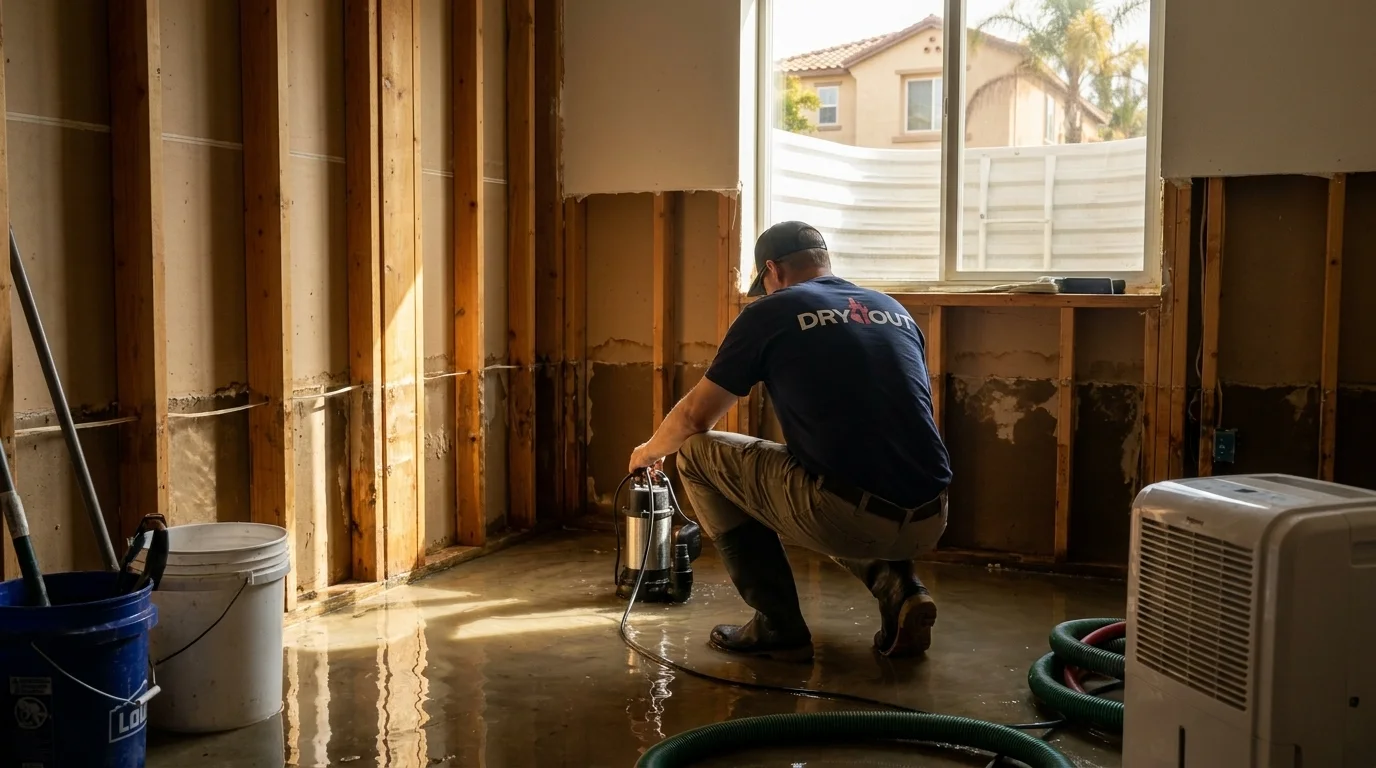
Basement water removal is different from a typical upstairs water loss because the basement itself works against the drying process. Concrete slabs hold moisture and release it slowly, foundation walls can keep seeping even after the original source is fixed, and poor airflow in a below-grade space means standing water sits longer and humidity climbs faster. Our crews bring submersible pumps for standing water over an inch or two, truck-mounted extractors for everything else, and moisture meters rated for concrete and masonry, not just drywall, so we’re measuring what’s actually happening inside the slab and block, not just the surface reading.
Timeline matters here. Category 1 water (clean supply line break) gives you more room to work with than a sewage backup or a basement that flooded from grading and surface water, which is treated as Category 2 or 3 depending on contact history. Either way, drywall and baseboard that sat in standing water usually need to come out, not just dry in place, especially in the lowest 12 to 24 inches where wicking concentrates.
Our process
- Safety check and source identification. Before anyone steps into standing water we check for electrical hazards (outlets, panels, and wiring that basements often route through) and identify whether the source is a sump pump failure, a supply line, a foundation crack, or surface water intrusion, since that affects both the category of water and the repair that follows.
- Pump-out and extraction. Submersible pumps handle bulk standing water, then truck-mounted extraction pulls remaining moisture from carpet, pad, and slab surface.
- Material removal. Saturated carpet pad, baseboard, and a flood cut of wet drywall come out where porous materials can’t be dried in place, keeping the cut height consistent with how high the water actually wicked.
- Drying and moisture mapping. Commercial dehumidifiers and air movers target the slab, framing, and any wall cavities, with moisture readings logged against the IICRC S500 standard until materials reach dry targets, not just until the space feels dry.
- Monitoring and scope for rebuild. We re-check moisture over several days before closing the job, and if drywall, trim, or flooring needs replacing, we can put together a scope for that rebuild work as part of the same project.
What separates a good basement flooding response from a bad one
The most common mistake is treating a basement like any other room: running air movers and calling it dry after the carpet feels okay underfoot, without ever checking moisture inside the slab or behind the baseboard. Concrete can read dry on the surface while it’s still releasing moisture into the air for days, which is exactly how a flooded basement turns into a mold problem three weeks later. Adjusters reviewing these claims look for documented moisture readings over time, not a single reading at the start, along with clear notes on category of water and what was removed versus dried in place. A sump pump failure that isn’t addressed at the source, or a foundation crack that gets dried around instead of sealed, means the same loss repeats with the next heavy rain.
What does basement flooding cleanup cost?
Costs vary with water volume, how much of the basement is finished, and whether the water involved sewage or contaminated groundwater. Every loss gets a written scope before work begins so you know what’s included, and homeowners insurance typically covers sudden water damage from a failed sump pump or burst pipe, though gradual seepage and groundwater flooding are often excluded or require separate flood coverage, so it’s worth checking your policy language.
| Scenario | Typical range |
|---|---|
| Small unfinished basement, clean water, minor standing water | $800 - $2,000 |
| Sump pump failure, moderate standing water, unfinished space | $1,500 - $3,500 |
| Finished basement, carpet and drywall affected | $3,000 - $7,000 |
| Foundation crack with ongoing seepage, repeat drying needed | $2,500 - $6,000 |
| Sewage backup or Category 3 contamination | $4,000 - $10,000+ |
Seasonal & regional considerations
Vista’s wet season brings the heaviest basement flooding risk, when saturated soil around older foundations loses its ability to drain and hydrostatic pressure pushes water through cracks and cold joints that stay dry the rest of the year. Homes on sloped lots or with grading that channels runoff toward the foundation see this repeat if the drainage issue isn’t addressed alongside the cleanup. Between storms, sump pump failures and supply line breaks account for most of the calls we get, which is why checking that sump system before the next storm season is worth doing even if nothing has flooded yet.
Service area
We handle basement flooding cleanup for homeowners in Vista and the surrounding North County communities, from homes with slab foundations to older properties with below-grade finished space.
If your basement is taking on water right now, call (888) 379-1688 and we’ll walk you through immediate steps while we get a crew moving to start extraction and schedule your moisture assessment.
Frequently Asked Questions
Does homeowners insurance cover basement flooding cleanup?
How long before a flooded basement becomes a mold problem?
Does it matter if the basement flooded from a sump pump failure versus a foundation crack?
How high up the wall do you cut drywall after a basement flood?
Can I still use my basement while it's drying out?
Looking for the best basement flooding cleanup company in Vista?
Dry 1 Out Restoration and Construction provides licensed and insured basement flooding cleanup in Vista, CA and the surrounding area, and has served local property owners since 2026. Customers rate us 5.0 out of 5 stars across 18 Google reviews. We answer calls 24/7 — call (888) 379-1688 for immediate help.
Need Basement Flooding Cleanup now?
We respond 24/7 across Vista and surrounding CA cities.
Related Coverage
- Our Restoration Services
- Contact Dry 1 Out Restoration and Construction
- Restoration Services in Berkeley
- Restoration Services in Carlsbad
- Restoration Services in Chula Vista
- Restoration Services in Concord
- Restoration Services in El Cajon
- Restoration Services in Encinitas
- Restoration Services in Escondido
- Restoration Services in Fremont
- Restoration Services in Hayward
- Restoration Services in Oakland
- Restoration Services in Oceanside
- Restoration Services in San Diego