24/7 Emergency Sewage Cleanup and Sanitization in San Francisco
24/7 emergency sewage cleanup and sanitization in San Francisco, CA. IICRC-certified, insurance billing accepted. Call (888) 379-1688.
Our IICRC-certified technicians are dispatched from our Vista, CA headquarters and are typically on-site in San Francisco within 60 minutes of your call.
Sewage backup in San Francisco? We answer 24/7. Call now and our crew heads out to contain the contamination and start the cleanup.
Sewage backup in San Francisco? Raw sewage pushing back through a floor drain or tub in a Mission District flat, or seeping up through a Sunset District basement after a heavy fog-season rain, is not something to mop up and hope for the best. We answer 24/1/7 and treat every sewage call as a biohazard event from the first phone call, because that standing water is carrying bacteria, viruses, and contaminants that reach wall cavities and subfloor fast in San Francisco’s older building stock.
Why San Francisco Properties See Sewage Backup Issues
Much of San Francisco runs on a combined sewer system, meaning stormwater and sanitary sewage share the same pipe network under normal conditions. During the city’s heavier winter rain events, that combined flow can surcharge, and homes on lower-lying blocks near the Mission District or along older sections of the Sunset District sometimes see sewage pushed back up through basement drains and laundry tubs instead of flowing out. Add to that the age of the sewer laterals themselves, many Edwardian and Victorian properties in Noe Valley and Bernal Heights still run on clay or cast-iron lateral pipe installed decades before current plumbing code, and root intrusion or pipe collapse becomes a second common trigger. In flats and multi-unit buildings common to the Mission and SoMa, a single failed lateral or shared stack can affect more than one unit at once.
Our Sewage Cleanup and Sanitization Process in San Francisco
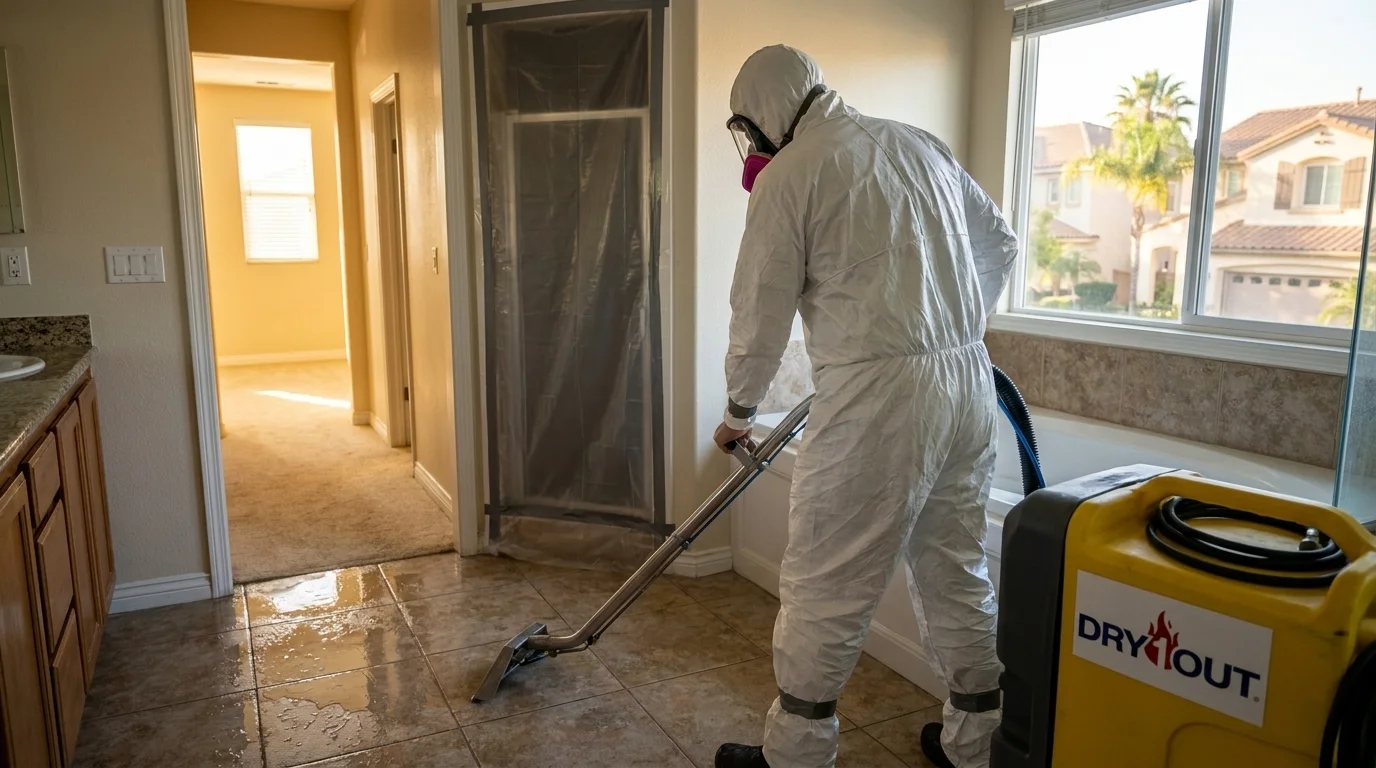
Every job starts with containment: we isolate the affected area, identify the contamination category under IICRC S500 guidance, and extract standing sewage before anyone walks it further into the home. From there, our crews remove and discard porous materials that can’t be sanitized, carpet pad, baseboards, drywall below the flood line, and anything else that held contact with the water. Hard surfaces and structural framing are cleaned, disinfected with EPA-registered antimicrobials, and monitored through drying using moisture meters rather than guesswork. In pre-1950 homes typical of the Richmond and Sunset Districts, plaster walls and solid wood subfloor hold moisture longer than modern drywall and OSB, so we extend drying time and recheck readings before closing a job rather than working off a fixed calendar.
San Francisco Insurance & HOA Coordination
Sewage losses in San Francisco often involve a mix of homeowner’s insurance, a sewer line endorsement, or in condo buildings around SoMa and Pacific Heights, an HOA master policy that covers common-area plumbing while the unit owner’s policy covers interior finishes. We document the loss with photos and moisture readings before any demolition, which gives adjusters and HOA boards the evidence they need to determine whose coverage applies. In multi-unit buildings, we coordinate scheduling with property managers so shared stacks or laterals serving more than one unit get addressed without repeat visits.
Local note
One detail that catches first-time callers off guard: San Francisco requires a sewer lateral inspection at the point of sale for many properties, which means a home changing hands can reveal an aging or partially failed lateral years before it would otherwise announce itself with a backup. If your Noe Valley or Bernal Heights property is mid-sale or recently closed and you’re now dealing with a backup, that inspection paperwork is worth pulling, it often tells us exactly where the failure point is before we even arrive.
A sewage event doesn’t wait for business hours, and neither do we. If you’re dealing with a backup in the Mission, a slow-draining basement in the Sunset near 94122, or a shared-stack issue in a SoMa building near 94103, call Dry 1 Out Restoration and Construction at (888) 379-1688. Our licensed (#993442) and insured crews handle extraction, sanitization, and the documentation your insurer or HOA will ask for, start to finish.
Serving San Francisco from our Vista headquarters — ★ 5.0 · 18 Google reviews
“As good as it gets… fast, friendly put my mind to ease…” — Doug, September 2026Read our reviews on Google →
Sewage Cleanup and Sanitization in San Francisco: Service Coverage
Frequently Asked Questions
How fast can you arrive for sewage cleanup and sanitization in San Francisco?
How does San Francisco's combined sewer system affect backup risk in neighborhoods like the Mission or Sunset?
Are Victorian and Edwardian homes in Noe Valley and Bernal Heights more prone to sewer line backups?
Does San Francisco's point-of-sale sewer lateral requirement matter for a current backup?
What's different about drying out a sewage-affected basement in a Sunset or Richmond District home versus a newer building?
How does insurance or HOA coverage work for a sewage backup in a SoMa or Pacific Heights condo?
Sewage Cleanup and Sanitization response in San Francisco
Most San Francisco calls see a technician on-site within 60 minutes from our Vista headquarters.
Nearby & Related
- 24/7 Emergency Sewage Cleanup and Sanitization in Vista
- Restoration Services in San Francisco
- 24/7 Emergency Fire Damage Restoration in San Francisco
- Mold Remediation in San Francisco
- 24/7 Emergency Sewage Cleanup and Sanitization in Concord
- 24/7 Emergency Sewage Cleanup and Sanitization in Oakland
- Contact Dry 1 Out Restoration and Construction