Sewage backup isn’t a mess you clean up with gloves and a mop, and it’s not just about the smell. Raw sewage carries bacteria, viruses, and parasites that can cause serious illness through skin contact, inhalation, or contamination of surfaces you touch every day. The water damage restoration industry classifies sewage as Category 3 water under IICRC S500 standards, the most contaminated class of water damage, meaning it’s treated as a biohazard from the moment it hits your floor. Without the right protective equipment, containment, and disposal process, DIY cleanup can spread contamination into HVAC systems, subflooring, and porous materials, turning a bad afternoon into a long-term health and structural problem.
Why Sewage Backup Is a Different Category of Problem
A sewage backup isn’t just dirty water. It’s water that’s been in contact with human waste, and depending on the source, it may also carry grease, chemicals, and whatever else was in the pipe when it failed. The contamination doesn’t stay on the surface. It wicks up drywall, soaks into carpet padding, and settles into the seams of hardwood and tile grout. Within 24 to 48 hours, bacteria in that moisture can start breaking down organic building materials, and mold spores already present in the air will find a food source in anything porous that stayed wet.
The health risks aren’t theoretical. Exposure to raw sewage has been linked to gastrointestinal illness, skin and eye infections, and respiratory issues from airborne bacteria and mold spores released as the material dries. Children, older adults, and anyone with a compromised immune system or respiratory condition face a higher risk from even short exposure.
Immediate Steps If You Have a Sewage Backup
If sewage has backed up into your home, your first priority is limiting exposure, not cleaning:
- Keep people and pets out of the affected area. Close the door if possible and don’t let anyone walk through the water, even briefly.
- Shut off the water source if you can identify it. If the backup is tied to a specific fixture, like a toilet or washing machine line, turn off the supply valve.
- Turn off electricity to the affected area at the breaker, if you can do so without stepping into standing water. Water and electrical current together are an electrocution risk.
- Open windows if weather allows, to start ventilating airborne contaminants and reduce the smell.
- Document the damage with photos and video before anything is touched, for your own records and for your insurance claim.
- Call a professional sewage cleanup company rather than attempting to remove the water or affected materials yourself.
What Not to Do
- Don’t use a wet/dry shop vac or household cleaning tools on sewage water. Standard equipment isn’t built to handle biohazard contamination and can spread it further through the hose or filter.
- Don’t walk through the affected area without protective gear. Bare feet, regular shoes, and bare hands all create a direct exposure path.
- Don’t try to salvage porous materials that had direct contact with sewage, including carpet, carpet padding, upholstered furniture, and some drywall. These materials absorb contamination in a way that can’t be fully sanitized.
- Don’t run your HVAC system if the backup is near a return vent or ductwork. This can circulate contaminated air through the rest of the house.
- Don’t assume a bad smell going away means the contamination is gone. Bacteria and residue can remain in materials long after the water itself has dried or been removed.
When to Call a Professional
Any sewage backup that affects more than a small, easily isolated area is a job for a trained crew, not a DIY project. This is especially true if the backup came from a sewer line (rather than a single clogged fixture), if it’s been sitting for more than a few hours, or if it reached carpet, drywall, or subflooring.
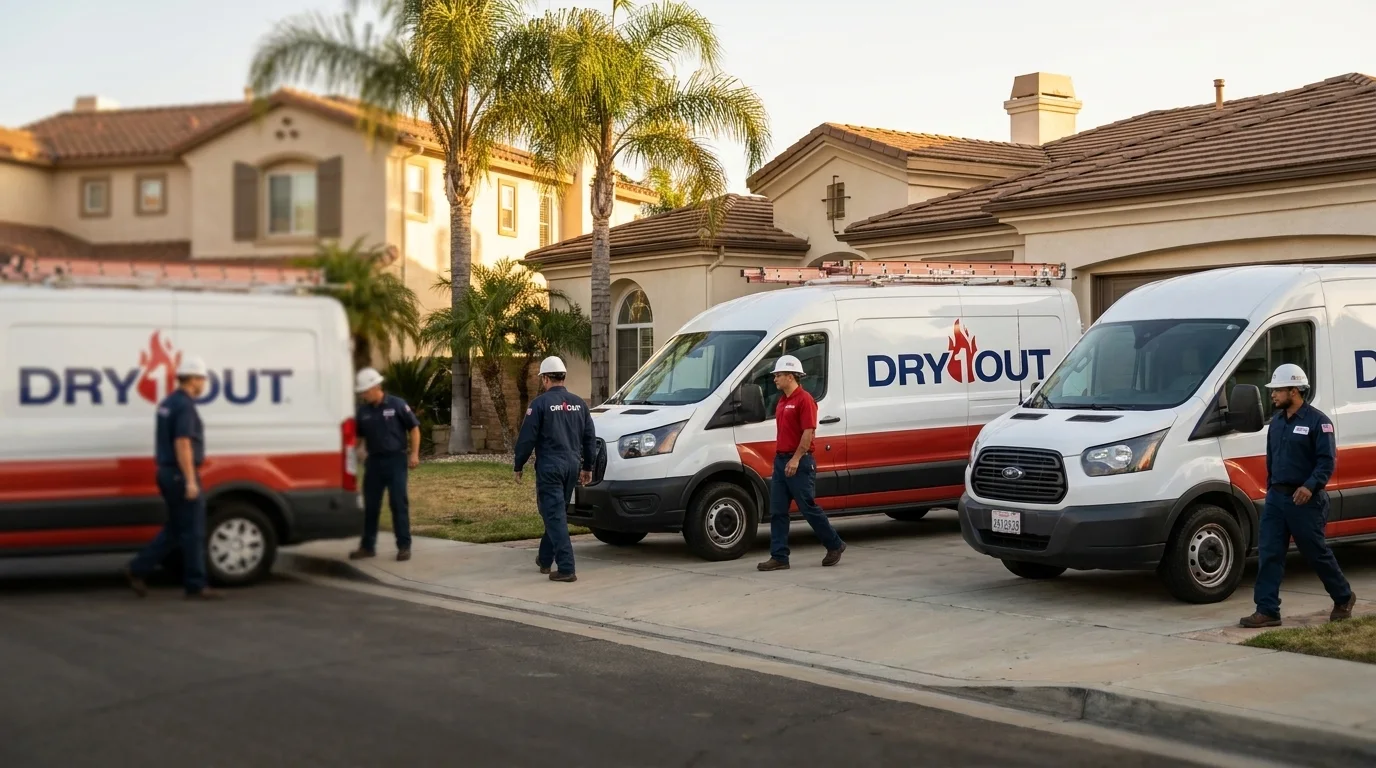
Professional sewage cleanup involves more than extraction. It includes testing to determine the extent of contamination, removal and disposal of unsalvageable materials, antimicrobial treatment of affected surfaces, and structural drying monitored to IICRC S500 standards to make sure moisture isn’t trapped behind walls or under flooring where it can’t be seen. Dry 1 Out Restoration and Construction is an IICRC Certified Firm serving Vista and the surrounding region, and our technicians hold IICRC Water Restoration and Applied Structural Drying certifications, which cover the specific protocols used for Category 3 water loss.
What the Recovery Process Actually Looks Like
Once a professional crew is on-site, the process generally follows a sequence: containment of the affected area to prevent cross-contamination, extraction of standing water and sewage, removal of materials that can’t be sanitized, cleaning and disinfecting of salvageable surfaces, and controlled drying with monitoring equipment to confirm moisture levels return to normal before the space is closed back up. Depending on how far the contamination traveled, this can mean removing baseboards, cutting out sections of drywall, or pulling flooring in the affected rooms.
This isn’t a one-visit fix. Drying alone can take several days, and a contractor will typically use moisture meters to confirm the structure is dry before any rebuild work starts. If your home needs drywall, flooring, or other materials replaced after the contaminated sections are removed, that reconstruction is a separate phase of the project, handled after the space has been verified clean and dry.
If sewage has backed up into your home or business in Vista, San Diego, Oceanside, Escondido, or elsewhere in the areas we serve, treat it as a health hazard first and a cleanup job second. Call Dry 1 Out Restoration and Construction at (888) 379-1688 to get a trained crew assessing the contamination and starting containment before it spreads any further.