TL;DR: Fire damage restoration in Vista, CA typically costs between $3,000 for a small, contained kitchen fire and $150,000 or more for a whole-house loss that needs full reconstruction. The biggest swing factors are how far smoke traveled through the HVAC system, whether the soot is dry or wet/protein-based, and how much water the fire department used to put the fire out. Most homeowners policies cover fire damage, but the final number depends on your coverage limits and how well the loss gets documented.
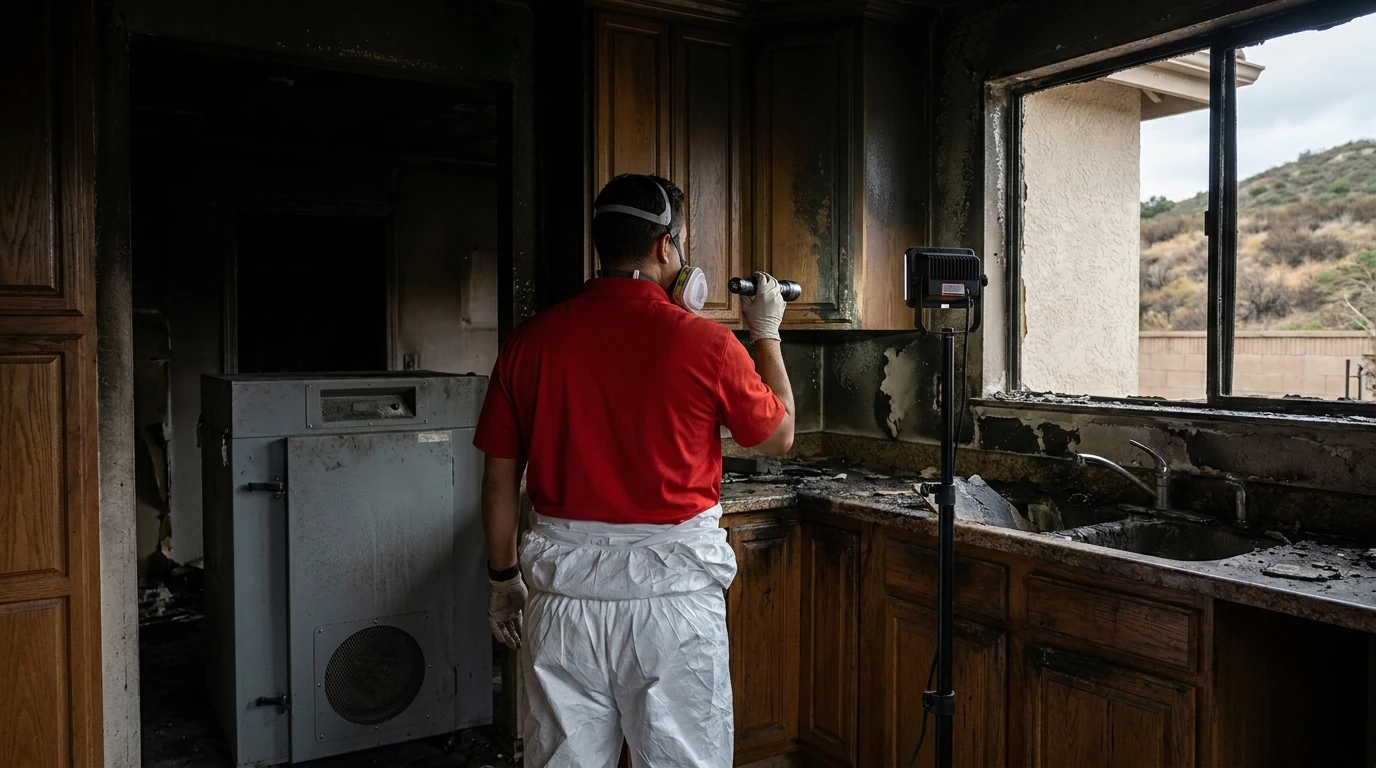
If a grease fire just scorched your kitchen cabinets, or a space heater smoldered in a bedroom overnight, you’re probably staring at two numbers right now: what the adjuster is going to approve, and what it’s actually going to cost to make the house livable again. Those two numbers don’t always match, and the gap usually comes down to scope. A fire that looks “small” on the surface can still push smoke and soot through every supply vent in a Vista home built on a slab with a central forced-air system, turning a one-room fire into a whole-house smoke job.
How Much Does Fire Damage Restoration Cost in Vista, CA?
Most Vista homeowners pay somewhere between $3,000 and $60,000 for fire damage restoration, with whole-structure losses running higher once reconstruction is involved. The table below reflects typical industry ranges for jobs of this size and scope in San Diego County; your actual cost depends on the specifics of the loss.
| Scenario | Typical Cost Range |
|---|---|
| Small kitchen or appliance fire, dry soot, single room | $3,000 - $8,000 |
| Multi-room fire with smoke travel through HVAC ducting | $10,000 - $25,000 |
| Structure fire with wet/protein soot and firefighting water damage | $25,000 - $60,000 |
| Contents cleaning and pack-out (often billed separately) | $1,500 - $10,000 |
| Debris removal and selective demolition | $2,000 - $12,000 |
| Whole-house loss requiring full reconstruction | $60,000 - $150,000+ |
Every loss is different. A written, itemized scope before work begins is the only way to know what your specific job will cost.
What Drives the Cost of Fire Damage Restoration Up or Down?
The single biggest cost driver is how far the smoke traveled, not how big the flames were. A fire can be out in minutes and still leave soot coating every room connected to the return air path.
Square footage affected matters, obviously, but soot type matters more per square foot. Dry soot (from a fast-burning paper or wood fire) wipes and vacuums off hard surfaces relatively easily. Wet or protein soot, the greasy, hard-to-clean residue from a smoldering fire involving plastics, foam, or cooking fat, bonds to surfaces and often requires solvent-based cleaning or replacement of porous materials altogether. It’s more labor, more specialized product, and more time.
Firefighting water adds a second damage category on top of the fire itself. Hundreds or thousands of gallons from suppression efforts soak into drywall, subfloor, and insulation, which means a water extraction and structural drying phase, governed by the ANSI/IICRC S500 water damage standard, has to happen before any fire-side repairs start.
Other factors that move the price: whether contents need to be inventoried, cleaned, and stored off-site during the work; how much demolition is needed to reach charred framing; and whether the rebuild requires permits and inspections through the city of Vista’s building department, which adds both time and contractor cost.
How Much Does Smoke Damage Cleanup Cost?
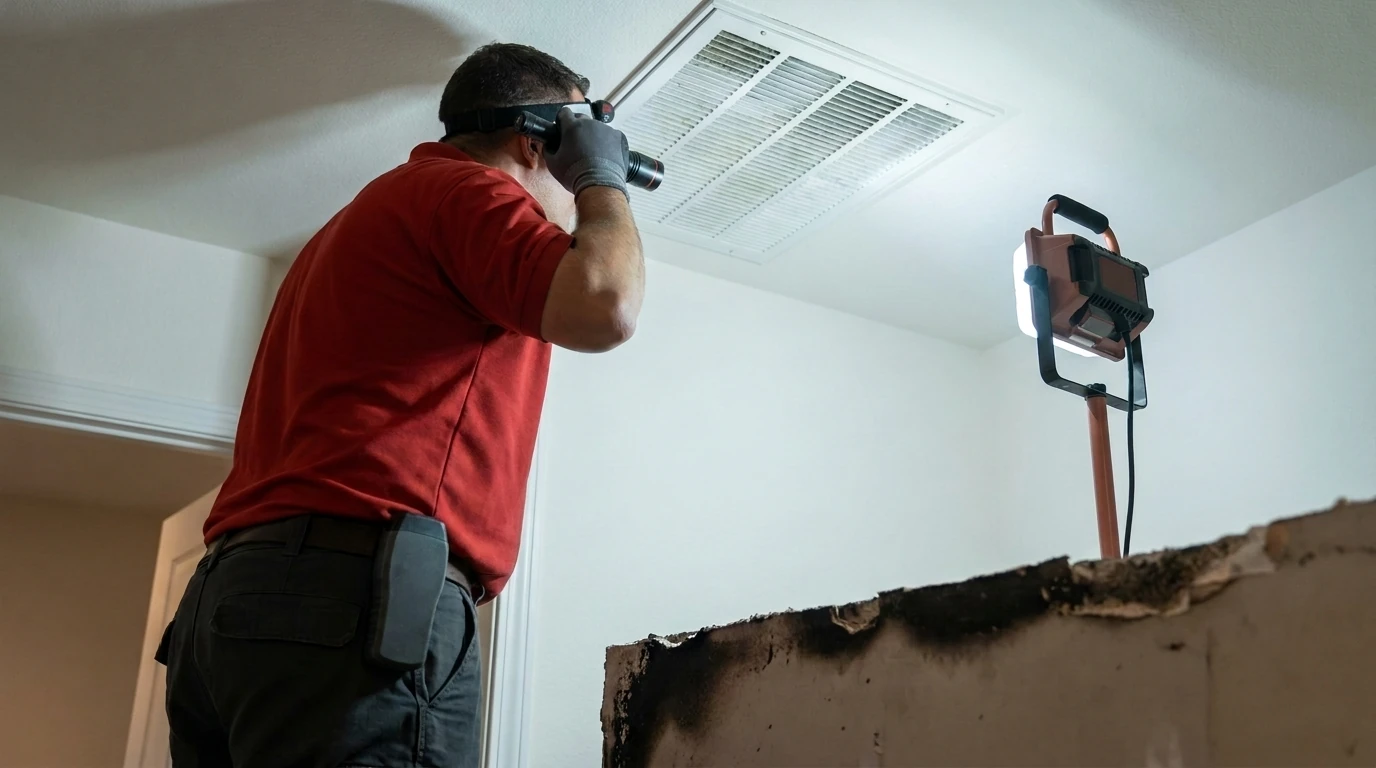
Smoke and soot cleanup on its own, separate from structural fire repair, typically runs $1,500 to $8,000 depending on how far the smoke traveled and what surfaces absorbed it. Drywall, insulation, and carpet usually can’t be deodorized back to original condition; they get replaced. Hard surfaces, cabinetry, and some structural wood can often be cleaned and sealed instead.
Odor is its own line item. Thermal fogging, ozone treatment, or hydroxyl generation to neutralize smoke odor in a mid-size home generally adds $500 to $2,500 on top of surface cleaning, depending on how deeply the odor has penetrated porous materials like drywall and subfloor. Our related post on how professionals remove smoke odor breaks down why a basic ozone machine rental rarely solves a real smoke odor problem on its own.
How Much Does Fire Debris Removal and Board-Up Cost?
Emergency board-up, boarding broken windows and covering a damaged roof section to secure the property, usually costs $300 to $1,500 depending on how many openings need coverage. This typically happens within hours of the fire, before any restoration work starts, to stop weather intrusion and deter trespassing.
Debris removal and selective demolition (pulling out charred drywall, cabinetry, and flooring that can’t be salvaged) runs $2,000 to $12,000 for most residential losses, scaling with square footage and how much structural material is affected. Dumpster rental, licensed hauling, and disposal fees are usually included in that range, though very large losses may need multiple roll-off containers.
Does Insurance Pay for Fire Damage Restoration in California?
Most California homeowners policies do cover fire damage, including the structure, attached systems, and personal contents, up to your policy’s dwelling and personal property limits. Fire is one of the named perils covered under a standard HO-3 policy, per the Insurance Information Institute.
What the adjuster actually approves depends on documentation. California insurers typically send an adjuster to scope the loss, photograph the damage, and write an estimate using standardized line-item software. That estimate can undercount hidden smoke travel into wall cavities or HVAC ductwork if nobody flags it during the inspection. A detailed moisture map, soot sampling, and a room-by-room scope from your restoration contractor gives the adjuster something concrete to work from, and it’s the single best way to avoid a lowball initial estimate.
The California Department of Insurance’s residential claims guide outlines your rights during a property claim, including the right to request a written explanation if a claim is denied or underpaid. A company like Dry 1 Out Restoration and Construction, which is also a licensed general contractor (California license #993442), can document the mitigation scope and the rebuild scope under one written estimate, which tends to move claims faster than coordinating two separate contractors.
What Happens During a Fire Damage Restoration Project?
- Emergency board-up and securing the property - windows, doors, and roof openings get covered the same day to stop weather and theft.
- Assessment and scope documentation - a technician inspects soot type, smoke travel path, and water intrusion, and writes a detailed scope for the insurance adjuster.
- Water extraction and structural drying - if firefighting water soaked the structure, this happens first, following the IICRC S500 standard.
- Contents pack-out and cleaning - salvageable belongings are inventoried, removed, and cleaned off-site while structural work proceeds.
- Soot and smoke cleanup - surfaces are cleaned, sealed, or removed based on soot type, following the IICRC’s fire and smoke restoration standard.
- Odor treatment - thermal fogging or hydroxyl treatment neutralizes residual smoke odor in affected materials.
- Demolition and reconstruction - charred framing, drywall, and flooring are rebuilt to match pre-loss condition, including any permitted work with the city.
Most single-room losses move through steps 1-6 in one to two weeks. Whole-house reconstruction can take several months depending on permitting and the extent of the rebuild.
A fire doesn’t wait for a convenient time, and neither should the first phone call. If your Vista or North County home just had a fire, get the scope documented before you sign anything with your adjuster.
About Dry 1 Out Restoration and Construction
Dry 1 Out Restoration and Construction is an IICRC Certified Firm serving Vista and San Diego County from its Vista office, with a second location in Hayward, CA. The company holds California contractor license #993442 and is licensed and insured. Its technicians carry IICRC credentials in water damage (WRT), structural drying (ASD), mold (AMRT), and fire and smoke restoration (FSRT), and the company operates on a 24/7 basis for emergency calls. Because Dry 1 Out also holds a general contracting license, the same team that handles mitigation after a fire can carry the project through demolition and rebuild.
Need help now? Call Dry 1 Out Restoration and Construction at (888) 379-1688.